Thursday, August 22, 2024

RENA RAMA – Live (Organic Music, 1983; rec. 1975)

 
Instrumental
International relevance: ***

Recorded with the second Rena Rama line-up with American Leroy Lowe on drums instead of Bengt Berger who left after their first album. Not released until 1983 on Urspår's sublabel Organic Music, but taped live at Stockholm's premiere jazz club Fasching one winter's evening in 1975. The other Rena Rama albums are mostly OK but not really top shelf material to my ears; it always sounds to me as if they hold something back. That's not the case here. Housed in a beautiful cover, ”Live” bursts with free jazz energy, especially Lennart Åberg who blows his saxophone harder than I think I've ever heard him blow before while Bobo Stenson attacks his piano with a fervour that from time to time makes me think of Cecil Taylor. Leroy Lowe is everywhere but bassist Palle Danielsson follows his every step. There's a sizzling energy even in the softer passages, as if they just wait for the next blowout that will come any moment. Some might think ”Live” is just a complement to the regular Rena Rama albums, but I think this is their absolutely finest moment on record. Essential!

Full album playlist

MOTVIND – Hjärta av stål (Affection, 1981)


Swedish vocals
International relevance: *

Their second to last album (followed by ”Kamikaze” in 1983) not counting reunions. They were never a good band to begin with, but this is even worse. The radio friendly hard rock production makes them sound like a second rate Jerusalem, and singer/guitarist Juris Salmins machoisms are even more grating than before.

Full album playlist

Wednesday, August 21, 2024

BRUNO WINTZELL – Debut (Polydor, 1971)


Swedish vocals
International relevance: *

I really don't know what to do with this album. It's actually not very strange, but I pick up some weird vibe in it I can't quite identify. I don't know if I'm just creeped out by the unnerving album cover where Wintzell seems a little bit to friendly with a piglet on the front and where he appears to seduce a cow on the back. If this is supposed to allude to Beach Boys' ”Pet Sounds” cover, this has a much darker and unpleasant aura. Especially for coming from someone who in his time was considered a sex symbol. (Decades later, in the 90's, he was also a host for a TV show called ”Tutti Frutti” styled after Italian entertainment shows with prominent display of female breasts. The show inspired to a new Swedish expression translating to ”tit television”.)

There are many bizarre turns in Wintzell's career which extends beyond the purely musical, but he later became an opera singer and he was also in the Swedish stage version of musical "Hair" along with Baby Grandmothers, Mecki Bodemark (Mecki Mark Men), Hawkey Franzén and Bill Öhrström (Fläsket Brinner, Ramlösa Kvällar, Tillsammans and others). ”Debut” is just that, his solo debut album. It's short on information who plays on it. The thorough arrangements are credited to John ”Rabbit” Bundrick, Björn J:son Lindh, and Sven-Olof Walldoff, and I suspect that it's Walldoff's orchestra and backing singers performing. Walldoff's gang was an oft-used lot in those days when a lavish and proficient backing was needed, as in Eurovision Song Contest in Brighton 1974 when ABBA won. A lot points in his direction as ”Debut” is heavily orchestrated.

The songs are all Swedish covers of Elton John, Leonard Cohen and Lennon/McCartney, three of them translated by Hawkey Franzén. They're all very well executed, but there's something in Wintzell's voice that suggests something else is going on here, a weird strain of something unknown that worries me. Like I said, I can't put my finger on what exactly it is but it runs through the entire album. Or maybe it's just me. Or the album cover. Who knows?

There is however one track that really stands out. ”The Fool On The Hill” is one of McCartney's dullest songs in the Beatles catalogue, but Wintzell and whoever accompanies him brings something entirely new out of it. Have you ever wondered what happens after a song fades out? Does the song just end cold, or do the musicians go on for several more minutes, freaking out completely as they know nobody will hear it anyway since the track will fade early on the record? Well, ”När solen går ner” may be the answer to that. The track could end at around four minutes but goes on for another two as the whole song jumps in at the deep end and becomes crazed-out psychedelic. There's nothing on the album with its slightly high-brow presentation of contemporary singer/songwriter material to prepare you for this final blow-out. You may not like the rest, but that track alone is certainly worth hearing!

Full album playlist

Tuesday, August 20, 2024

SABU MARTINEZ – The Dalecarlia Recordings (Mellotronen, 2009; rec. 1971-72) / Burned Sugar (Mellotronen, 2008; rec. 1973-74) / Maldito Primitivo (Mellotronen, 2009; rec. 1977) / SABU MARTINEZ & SAHIB SHIHAB – Winds & Skins (Mellotronen, 2008; rec. 1967/1978)


Instrumental, other languages
International relevance: **

Sabu Martinez's 1971 album ”Afro Temple” is obviously some kind of classic, but I find most of it dull percussion excesses with some spoken word over and some dashes of Latin jazz. So I was less than thrilled approaching a full set of four albums released on Mellotronen, covering Martinez's Swedish years.


Martinez moved here in 1967, and the earliest disc in the Mellotronen lot features recordings from that year, with saxophonist/flautist Sahib Shihad and made for the Swedish Radio. One of '67 tracks is only a spoken word piece on 'the theme of good and bad service'. The other one is an OK but unspectacular five minute jazz piece with Palle Danielsson on bass. The 1978 session, also for the Swedish Radio is slightly better with the half-bizarre ”The Distorted Sioux Indian” being an at least interesting little piece next two boring percussion solos.

Stemming from four different sessions, "The Dalecarlia Recordings" opens with thirteen very long minutes of another percussion workout, "The Latin Percussion People", which isn't a good start, but it picks up the steam soon after that. A selection of tracks from the 1971 album "Aurora Borealis" with Björnbobandet works up a great groove, and although I'm not too keen on big band stuff, these tracks are quite good. My favourite track however is "Puertorican Beans And Rice". The sound is murky but it reeks with so much vitality not even the quesionable fidelity can take anything from the contagious vivacity of the moment.


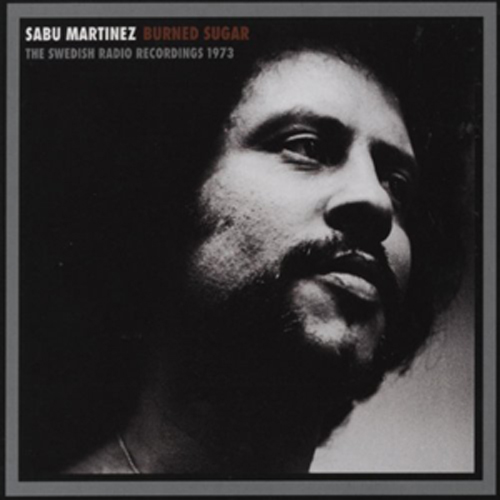
”Burned Sugar” features another Swedish Radio session, this time fron 1973, with the CD being expanded with three tracks recorded in the Polyvox Studio in Stockholm the following year. Not only the best volume of these four, but also the best Martinez album I've heard! It's an incredibly lively document with sweaty, funky, organic tracks. Clearly moving in the fusion jazz direction, but this is fusion that's meaty, beaty, big and bouncy and pretty damn irresistable. The Polyvox takes detracts a bit (especially the "Education" track which is only a minute and a half of the band working out a beat) but I can live with that.

The title track from ”Maldito Primitivo” picks up where "Burned Sugar" left off and would have fit nicely on that collection, and is by far the best track on this disc.The remainder of the disc is jazzy salsa galore, and while it's pretty good, it isn't nearly on the same level as the tremendous "Burned Sugar". 

Taken together, these four volumes are a varied presentation of Sabu Martinez's musicianship. They have their ups and downs, depending on your personal preferences. All in all, they're much better than "Afro Temple", with "Burned Sugar" being my obvious pick of the bunch.

Winds & Skins full album playlist
The Dalecarlia Reordings 1971-72 full album playlist
Burned Sugar full album playlist
Maldito Primitivo full album playlist

Monday, August 19, 2024

KAIPA – Händer (Polar, 1980) / Nattdjurstid (Piglet, 1982)


Swedish vocals, instrumental
International relevance: */*

Few albums have represented such a sharp turn in style as these. When guitarist Roine Stolt left the band in 1979, he took the original Kaipa style with him and left the band with something that's closer to a poppish, synth inflicted post punk with very, very little left of what characterized Kaipa's first three albums. Only instrumentals ”Regn” and ”Elgrandi” on ”Händer” show traces of their past, but those traces are so small they almost don't count.

I've never been a Kaipa fan but these albums are definitely inferior to anything they originally became known for. The early albums had a vision whereas these two sound like a band lost. Especially ”Händer” sounds exactly like it is, a band struggling to come up with something after one important member left. I almost feel sorry for them clutching for the weakest straws; stiff playing, ill-fitting production, and worst of all: bad songwriting.

”Händer” was released on ABBA:s label Polar and they were obviously not pleased, so for the next album ”Nattdjurstid” 1982, Kaipa geared down to Uppsala imprint Piglet. Maybe the decreased production values were to their advantage, since ”Nattdjurstid” is a slightly better album. Kaipa seems to have a better comprehension of their new style, the songs are tighter and more effective, and the smaller sound suits the new material better. The band simply sounds more self-assured. There are even moments of true inspiration, as on ”Zepapo” where Stolt replacement Max Åhman goes into full Robert Fripp mode. It's still not a good album though, and they probably realized that going further down this path that really wasn't theirs would only lead to further humiliation. By the end of the year, Kaipa disbanded.

Händer full album

Nattdjurstid full album

Sunday, August 18, 2024

RALPH LUNDSTEN & THE ANDROMEDA ALL STARS – Complete albums 1977-1982

A curious character, this Ralph Lundsten guy. His career somehow parallels that of Ragnar Grippe, as Lundsten started out as an electro-acoustic composer and then gradually moved towards more commercially accessible music. A wider attention came in the mid 70's with his series of so called nature symphonies taking inspiration from Swedish nature and folklore. Lundsten became something of a new age music pioneer, recording many of his albums in his Andromeda studio in a house painted pink. He was on a massive ego trip, seemingly only liking his own music. Most of his many many albums are cheesy and aimed at the crystal healers market. To be fair, a lot of his un-commercial early stuff (from the late 60's and early 70's) is quite superficial too but at least somewhat more interesting to listen to.

With the 70's drawing to a close, Lundsten assembled an amorphous band called The Andromeda All Stars and rarely has the term ”all stars” been more to the point. Plenty of name performers passed through, too numerous to mention in all, but a few would be Bernt Rosengren, Ahmadu Jarr, Tommy Körberg, Jojje Wadenius, Monica Dominique, Wlodek Gulgowski, Björn Inge (November et al), Björn J:son Lindh, Janne Schaffer, Tomas Ledin, and renaissance music flag-bearer Sven Berger. This massive lot of people helps the four Andromeda All Stars albums into the progg realm.


Universe (Harvest, 1977)
Instrumental, wordless vocals
International relevance: **

The first All Stars album (housed in a truly eye-catching cover) is one of Lundsten's best, although I hesitate to use superlatives when talking about Lundsten's albums, no matter what line-up they flash. It's uneven and still very cheesy, but it has some entertaining moments of gurgling and bubbling sounds where Lundsten probably just fools around with the crazy sound effects because he enjoys it. As typical to his post-EAM albums, there are plenty of synth washes. The best tracks are those that have a rhythmic structure, like ”Harvest In Heaven”, ”Space Funeral”, and the space rock sounding ”The Planet Of Winds”.


Discophrenia (Harvest, 1978)
Instrumental
International relevance: **

With the disco wave sweeping the world in the late 70's, plenty of musicians jumped the danceable bandwagon. Even the self-loving Ralph Lundsten got bit by the bug, but his interpretation of disco is of course different to others. He either mess with it deliberatly, or he misunderstands everything. The title track is in fact rather interesting as Lundsten seems to predict the synth pop still a few years away from public recognition. It actually reminds me a bit of the early Human League albums (those before the girls joined the group and they became MTV darlings with ”Don't You Want Me”) and they hadn't been released yet when ”Discophrenia” came out. The album even spawned a single (with an extended remix of the title track), a rather rare thing in Lundsten's discography.


Alpha Ralpha Boulevard (Harvest, 1979)
Instrumental, English vocals
International relevance: **

The third Andromeda All Stars album falls somewhere between the first two, with characteristics spilling over from both. ”Rendezvous With A Washing-Machine”, ”Ego Love Song” (appropriate title for Lundsten!) and ”Horrorscope” are still discophrenic, while other chunks stick to the wishy-washy synth layers. The album is very inconsistent, and it sounds as if it's cooked up from leftovers from the previous two discs. The all stars concept is beginning to wear thin.


The New Age (Harvest, 1982)
Instrumental
International relevance: **

After a couple of electronic/symphonic works in the beginning of the 80's, Lundsten returned in 1982 with the final album credited to The Andromeda All Stars. Largely new-agey as the title lets you know, but a more coherent work than ”Alpha Ralpha Boulevard”. But it does sound as if the steam had run out altogether of the All Stars project. It's less colourful and crazy than the initial trio, there's no real push to it.

From "Universe"
Universe Calling / The Space Sneaker / In The Shade Of The Purple Moon / The Hot Andromedary / The Blue Planet / Harvest In Heaven / In The Erotosphere / The Celestial Pilgrim / Rhapzodiac / The Planet Of Winds / Lunatic Safari / Space Funeral / Cosmic Song

From "Discophrenia"
Andromedan Nights / Discophrenia / Luna Lolita / Robot Amoroso

From "Alpha Ralpha Boulevard"
Alpha Ralpha Boulevard / Rendezvous With A Washing-Machine / Space Flower Dance / Ego Love Song / Happy Earthday / Horrorscope / Computerful Love / Dancing In A Dream / Lifetide

From "The New Age"
Morning Of Creation / Time Storm / Future Carnival / Trance-Action / The Remembering Castle / Garden Of Delight

Saturday, August 17, 2024

OKAY TEMIZ TRIO – Turkish Folk Jazz (Sonet, 1975) / ORIENTAL WIND – Zikir (Sun, 1979) ORIENTAL WIND – Live In Bremen (JARO, 1982) / OKAY TEMIZ'S ORIENTAL WIND – Live At Montreux Jazz Festival 1982 (Caz Plak, 2022)

Okay Temiz's albums are sprinkled all over this blog, but this post fills in the gaps in his discography up to 1982. It's a rather voluminous body of work, and if you count the albums with him only as a sideman, it becomes unfathomable. But I always take a closer look on an album with his name on it. His name is a stamp of approval. If he's there, it can't be all that bad.

OKAY TEMIZ TRIO – Turkish Folk Jazz (Sonet, 1975)
Instrumental
International relevance: ***

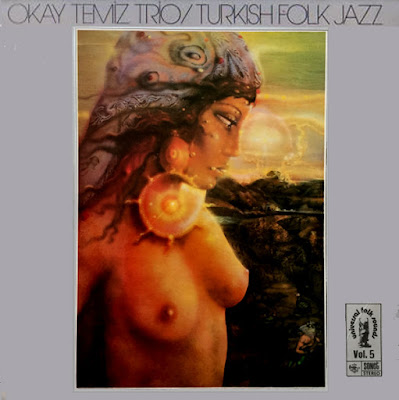
What could possibly go wrong with a title like that? Nothing, and nothing does either. It's recorded as a trio with Swedish jazz legend Björn Alke on bass and Temiz's fellow countryman Saffet Gündeger on clarinet (plus multiple arrangements signed Maffy Falay although he doesn't appear on the album in person). Temiz's Turkish roots have an even stronger emphasis here than on several of his other albums, and the melodies and harmonies get to fly high and free within the smaller trio format. It also means there's more room for Temiz's drumming, and he's really going for it here. He plays in all directions at once, wide and deep, high and low, and right at you. Truly musical drumming, and Gündeger finds his way around the drummer's thunderous tumble. He blows his instrument so hard as if his life depended on it, making wild runs like the clarinet's Coltrane. Even Björn Alke, anything but a bass bungler, gets overshadowed by the Turkish typhoon of sound. It's as if he knows he better stay out of the way and keep the pulse going elaborately but without trying to show off. A one hundred percent stunning album.


ORIENTAL WIND – Zikir
(Sun, 1979)
Instrumental
International relevance: ***

The release history of ”Zikir” is a bit complicated and I'm not going to get all tangled up in trying to explain which release is which and what songs are on which edition, as the CD reissue on Ada Müzik sets everything straight in terms of songs included. The picture above shows the album cover used for most early European releases.

This is a very different beast to ”Turkish Folk Jazz”. With more musicians involved, the arrangements are more rigid. There are still room for improvisation of course, but there's nothing here that can match the fury of ”Turkish Folk Jazz”. There's also something about the sound that breathes jazz fusion air, a sort of smoothness that I think is too much out of place for this music. I can just imagine what a smaller band and a more sympathetic production would have done to the outcome. Still there are entertaining moments, such as the wacky ”Kabak Tatlısı” which sounds as if they played a jew's harp through a wah-wah and then added drunken ducks on top of it. But as a whole, ”Zikir” stands as one of the weaker Temiz efforts.


ORIENTAL WIND – Live In Bremen
(JARO, 1982)
Instrumental
International relevance: ***

This 1981 recording from the Packhaus Theater in Bremen opens with ”Batum”, a throwback to Temiz's Sevda days although Lelle Kullgrens electric guitar gives it a very different vibe. I don't like his playing at all. But to be honest, I don't think Oriental Wind had a good evening back then in late October 1981. The music sounds strained (very unusual for a Temiz album!) and tense in a bad way. It's almost as if there was something worrying them, as is they had something else on their mind and tried to make up for the missing spark with force. Some moments here are better than others, but I miss the natural flow and telepathy between the musicians most of the time. And flow and telepathy are crucial for this music to work.


OKAY TEMIZ'S ORIENTAL WIND – Live At Montreux Jazz Festival 1982
(Caz Plak, 2022)
Instrumental
International relevance: ***

Ah, now we're talking! Forty minutes of top range Turk jazz action! Still guitar in the mix, but Lelle Kullgren is out and Stefan Osterberg is in and he's much more responsive to the moment, firing off some almost Terje Rypdal-like salvos that hit exactly where they should, But everybody's on the same page here, effortlessly striving in the same direction, thinking with one unified mind. This Montreux show, left in the vaults for a baffling forty years, is the exact opposite of the stifled Bremen date. It's all about the collective efforts, but every musician needs to be mentioned by name as they all play on their absolut top. Lennart Åberg moves like a panther in his death defying guerilla sax solos. Palle Danielsson is freaking insane on the bass, playing stuff that I thought was humanly impossible. He's almost like an orchestra in itself! Bobo Stenson's piano and keyboards might seem a bit tame in comparison, but although he fires away some dazzling keyboard runs, his main role is being the glue that keeps it all together, filling out whatever musical spaces need to be filled The ensemble play is out of this world, it's more than telepathy – they're tight as siamese quintuplets. No need to hold it back: Of every album I've written about here – and we're talking thousands of albums – this album is among the very, very, very best.

Turkish Folk Jazz full album
Zikir full album playlist (CD version)
Live In Bremen full album playlist
Live At Montreux full album playlist
(Bandcamp)