Saturday, August 24, 2024

MODERN SOUND QUINTET – OTINKU (Odeon, 1971)


Instrumental
International relevance: **

A real oddity, this. The music itself is rather straight ahead jazz funk but what sets it apart from other jazz funk albums is that the main instrument is steel pans! Pannist Rudy Smith left Trinidad for Sweden in the late 1960's and played with plenty of Swedish musicians including Bernt Rosengren, Ingemar Olsson and Ewert Ljusberg. His Modern Sound outfit went through several changes, from quartet to quintet before becoming Modern Sound Corporation in the late 70's. While steel pans produce a sound that's extremely annoying to me, Smith uses them more like a piano making them fit surprisingly well into the music. The pans work particularly well on the African flavoured title track, Joe Zawinul penned ”Mercy, Mercy, Mercy”, the modal ”Ursia” and their take on Herbie Mann's ”Memphis Underground”.

Internationally sounding as it is, the album had an international becoming as well. Recorded with musicians from Finland, Ghana, Triniad, Barbados and Surinam, it was recorded in Stockholm and produced by arranger, trumpeter etc Lasse Samulesson and released only in Finland! It will never be a favourite album of mine, but I must admit it's much better than I ever expected it to be, with some rather appealing moments.

A revamped band released one further album in 1978 (as Modern Sound Corporation) through the Swedish branch of low budget label K-Tel.

Full album playlist

Friday, August 23, 2024

TOTTA'S BLUESBAND – Live At Renströmska (Nacksving, 1981)


English vocals
International relevance: *

Totta's – or Tottas to use the Swedish possessive form – Bluesband began life as a side project to the other two bands Torsten ”Totta” Näslund was part of in the 70's, Nynningen and Nationalteatern. This side project was even called Nynningens och Nationalteaterns Fritidsorkester ("fritidsorkester" meaning something like ”hobby orchestra”), before eventually evolving into Tottas Bluesband with several members from the old Nynningen and Nacksving label coterie. With the blues always close to Totta Näslund's heart, this was a chance for him to fully immerse himself in songs by the likes of J.B. Lenoir, Otis Rush, Robert Johnson, Howlin' Wolf and Jimmy Rogers. They became a popular outfit during the 80's, and also had a weekly spot every Monday on Näslund's and bassist Nikke Ström's own restaurant C Von in hometown Gothenburg. This particular album, the band's debut, was taped live during two consecutive evenings at the Renströmska jazz club in the late summer of 1981.

A lot of people will disagree with me, but I don't think Totta Näslund was a good blues singer. His voice is dull and and colourless and while I'd never question his love for the blues was serious and honest, Tottas Bluesband still sound just like a band playing pubs to beer burping buddybuddies and the occasional married couple with the husband touching his wife in more appropriate ways the later the hour and the drunker he gets. To me, this simply sounds as any old bores with hats and sunglasses on and think they're ”bloooooze, man”. They go through every well-rehearsed move in the book but they never get the blues down for real. It's all form and very little real content. Put on a proper Howlin' Wolf track and this album will run home crying for mum. And if you want straight pub rock go for the real British stuff instead – any early Dr. Feelgood album with Wilko Johnson grinds this album to tiny shards between the teeth.

An equally uninteresting single coupling ”Ain't Your Business” with ”Too Bad” appeared in 1982, and a few more albums followed sporadically during the rest of the 80's. Totta Näslund later had several solo albums before passing away in 2005. His very last regular album was a tribute album to Bob Dylan together with Mikael Wiehe.

Full album playlist

Thursday, August 22, 2024

RENA RAMA – Live (Organic Music, 1983; rec. 1975)

 
Instrumental
International relevance: ***

Recorded with the second Rena Rama line-up with American Leroy Lowe on drums instead of Bengt Berger who left after their first album. Not released until 1983 on Urspår's sublabel Organic Music, but taped live at Stockholm's premiere jazz club Fasching one winter's evening in 1975. The other Rena Rama albums are mostly OK but not really top shelf material to my ears; it always sounds to me as if they hold something back. That's not the case here. Housed in a beautiful cover, ”Live” bursts with free jazz energy, especially Lennart Åberg who blows his saxophone harder than I think I've ever heard him blow before while Bobo Stenson attacks his piano with a fervour that from time to time makes me think of Cecil Taylor. Leroy Lowe is everywhere but bassist Palle Danielsson follows his every step. There's a sizzling energy even in the softer passages, as if they just wait for the next blowout that will come any moment. Some might think ”Live” is just a complement to the regular Rena Rama albums, but I think this is their absolutely finest moment on record. Essential!

Full album playlist

MOTVIND – Hjärta av stål (Affection, 1981)


Swedish vocals
International relevance: *

Their second to last album (followed by ”Kamikaze” in 1983) not counting reunions. They were never a good band to begin with, but this is even worse. The radio friendly hard rock production makes them sound like a second rate Jerusalem, and singer/guitarist Juris Salmins machoisms are even more grating than before.

Full album playlist

Wednesday, August 21, 2024

BRUNO WINTZELL – Debut (Polydor, 1971)


Swedish vocals
International relevance: *

I really don't know what to do with this album. It's actually not very strange, but I pick up some weird vibe in it I can't quite identify. I don't know if I'm just creeped out by the unnerving album cover where Wintzell seems a little bit to friendly with a piglet on the front and where he appears to seduce a cow on the back. If this is supposed to allude to Beach Boys' ”Pet Sounds” cover, this has a much darker and unpleasant aura. Especially for coming from someone who in his time was considered a sex symbol. (Decades later, in the 90's, he was also a host for a TV show called ”Tutti Frutti” styled after Italian entertainment shows with prominent display of female breasts. The show inspired to a new Swedish expression translating to ”tit television”.)

There are many bizarre turns in Wintzell's career which extends beyond the purely musical, but he later became an opera singer and he was also in the Swedish stage version of musical "Hair" along with Baby Grandmothers, Mecki Bodemark (Mecki Mark Men), Hawkey Franzén and Bill Öhrström (Fläsket Brinner, Ramlösa Kvällar, Tillsammans and others). ”Debut” is just that, his solo debut album. It's short on information who plays on it. The thorough arrangements are credited to John ”Rabbit” Bundrick, Björn J:son Lindh, and Sven-Olof Walldoff, and I suspect that it's Walldoff's orchestra and backing singers performing. Walldoff's gang was an oft-used lot in those days when a lavish and proficient backing was needed, as in Eurovision Song Contest in Brighton 1974 when ABBA won. A lot points in his direction as ”Debut” is heavily orchestrated.

The songs are all Swedish covers of Elton John, Leonard Cohen and Lennon/McCartney, three of them translated by Hawkey Franzén. They're all very well executed, but there's something in Wintzell's voice that suggests something else is going on here, a weird strain of something unknown that worries me. Like I said, I can't put my finger on what exactly it is but it runs through the entire album. Or maybe it's just me. Or the album cover. Who knows?

There is however one track that really stands out. ”The Fool On The Hill” is one of McCartney's dullest songs in the Beatles catalogue, but Wintzell and whoever accompanies him brings something entirely new out of it. Have you ever wondered what happens after a song fades out? Does the song just end cold, or do the musicians go on for several more minutes, freaking out completely as they know nobody will hear it anyway since the track will fade early on the record? Well, ”När solen går ner” may be the answer to that. The track could end at around four minutes but goes on for another two as the whole song jumps in at the deep end and becomes crazed-out psychedelic. There's nothing on the album with its slightly high-brow presentation of contemporary singer/songwriter material to prepare you for this final blow-out. You may not like the rest, but that track alone is certainly worth hearing!

Full album playlist

Tuesday, August 20, 2024

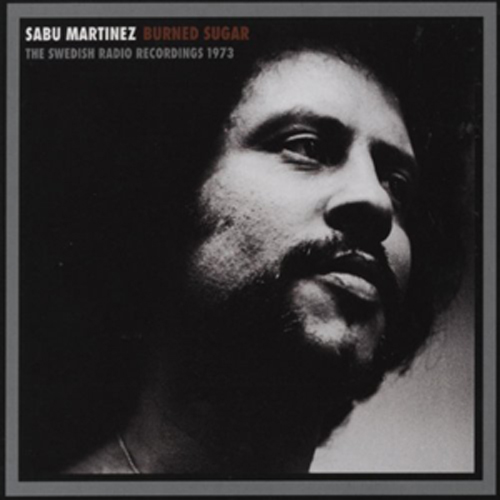
SABU MARTINEZ – The Dalecarlia Recordings (Mellotronen, 2009; rec. 1971-72) / Burned Sugar (Mellotronen, 2008; rec. 1973-74) / Maldito Primitivo (Mellotronen, 2009; rec. 1977) / SABU MARTINEZ & SAHIB SHIHAB – Winds & Skins (Mellotronen, 2008; rec. 1967/1978)


Instrumental, other languages
International relevance: **

Sabu Martinez's 1971 album ”Afro Temple” is obviously some kind of classic, but I find most of it dull percussion excesses with some spoken word over and some dashes of Latin jazz. So I was less than thrilled approaching a full set of four albums released on Mellotronen, covering Martinez's Swedish years.


Martinez moved here in 1967, and the earliest disc in the Mellotronen lot features recordings from that year, with saxophonist/flautist Sahib Shihad and made for the Swedish Radio. One of '67 tracks is only a spoken word piece on 'the theme of good and bad service'. The other one is an OK but unspectacular five minute jazz piece with Palle Danielsson on bass. The 1978 session, also for the Swedish Radio is slightly better with the half-bizarre ”The Distorted Sioux Indian” being an at least interesting little piece next two boring percussion solos.

Stemming from four different sessions, "The Dalecarlia Recordings" opens with thirteen very long minutes of another percussion workout, "The Latin Percussion People", which isn't a good start, but it picks up the steam soon after that. A selection of tracks from the 1971 album "Aurora Borealis" with Björnbobandet works up a great groove, and although I'm not too keen on big band stuff, these tracks are quite good. My favourite track however is "Puertorican Beans And Rice". The sound is murky but it reeks with so much vitality not even the quesionable fidelity can take anything from the contagious vivacity of the moment.


”Burned Sugar” features another Swedish Radio session, this time fron 1973, with the CD being expanded with three tracks recorded in the Polyvox Studio in Stockholm the following year. Not only the best volume of these four, but also the best Martinez album I've heard! It's an incredibly lively document with sweaty, funky, organic tracks. Clearly moving in the fusion jazz direction, but this is fusion that's meaty, beaty, big and bouncy and pretty damn irresistable. The Polyvox takes detracts a bit (especially the "Education" track which is only a minute and a half of the band working out a beat) but I can live with that.

The title track from ”Maldito Primitivo” picks up where "Burned Sugar" left off and would have fit nicely on that collection, and is by far the best track on this disc.The remainder of the disc is jazzy salsa galore, and while it's pretty good, it isn't nearly on the same level as the tremendous "Burned Sugar". 

Taken together, these four volumes are a varied presentation of Sabu Martinez's musicianship. They have their ups and downs, depending on your personal preferences. All in all, they're much better than "Afro Temple", with "Burned Sugar" being my obvious pick of the bunch.

Winds & Skins full album playlist
The Dalecarlia Reordings 1971-72 full album playlist
Burned Sugar full album playlist
Maldito Primitivo full album playlist
Monday, August 19, 2024

KAIPA – Händer (Polar, 1980) / Nattdjurstid (Piglet, 1982)


Swedish vocals, instrumental
International relevance: */*

Few albums have represented such a sharp turn in style as these. When guitarist Roine Stolt left the band in 1979, he took the original Kaipa style with him and left the band with something that's closer to a poppish, synth inflicted post punk with very, very little left of what characterized Kaipa's first three albums. Only instrumentals ”Regn” and ”Elgrandi” on ”Händer” show traces of their past, but those traces are so small they almost don't count.

I've never been a Kaipa fan but these albums are definitely inferior to anything they originally became known for. The early albums had a vision whereas these two sound like a band lost. Especially ”Händer” sounds exactly like it is, a band struggling to come up with something after one important member left. I almost feel sorry for them clutching for the weakest straws; stiff playing, ill-fitting production, and worst of all: bad songwriting.

”Händer” was released on ABBA:s label Polar and they were obviously not pleased, so for the next album ”Nattdjurstid” 1982, Kaipa geared down to Uppsala imprint Piglet. Maybe the decreased production values were to their advantage, since ”Nattdjurstid” is a slightly better album. Kaipa seems to have a better comprehension of their new style, the songs are tighter and more effective, and the smaller sound suits the new material better. The band simply sounds more self-assured. There are even moments of true inspiration, as on ”Zepapo” where Stolt replacement Max Åhman goes into full Robert Fripp mode. It's still not a good album though, and they probably realized that going further down this path that really wasn't theirs would only lead to further humiliation. By the end of the year, Kaipa disbanded.

Händer full album

Nattdjurstid full album