Sunday, July 29, 2018

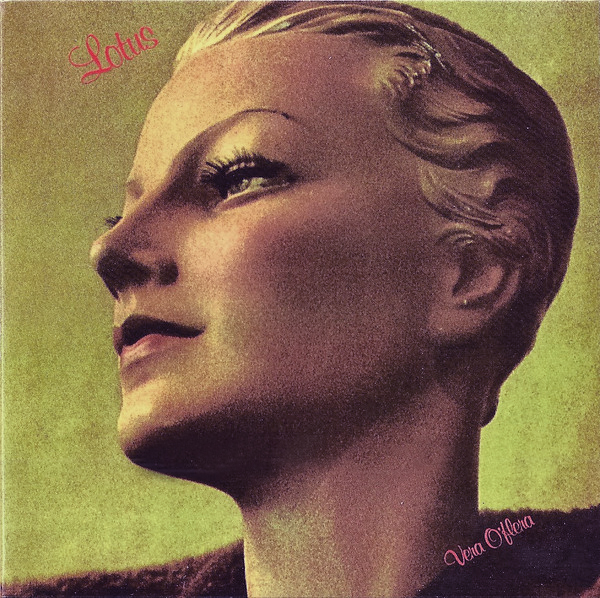
LOTUS – Vera O'Flera (SMA, 1976)

Instrumental, Swedish vocals
International relevance: *** 

Second album from this technically driven outfit, housed in a striking cover. During the two years that passed since their debut they changed their rhythm section, with Lerker Allgulander taking bassist Stefan Berggrenssons place, and Henning Öfverbeck handing over his drum stool to Håkan Nyberg (who later teamed up with Mikael Wiehe). It didn't change things for the better Lotus' debut was a pretty boring effort, but this one is even worse. It's tight and complex enough to get prog rock and fusion fans going, but it bores me to death. It's all about show-off and minutious precision. Their humour extends to an idiotic rock version of Swedish children's song ”Bä bä vita lamm” (the only vocal track on the album). Too bad it's not funny in the least. To make matters worse, the album was reissued on CD in 2004 with two previously unreleased tracks.

Full album playlist

Saturday, July 28, 2018

RAGNARÖK – Ragnarök (Silence, 1976) / Fjärilar i magen (Silence, 1979) / Fata Morgana (Silence, 1981)

Like Kung Tung, Ragnarök came from Kalmar (Ragnarök guitarist Peter Bryngelsson has played in both bands) but their sound is vastly different, with the latter at best creating a web of lyricism and introspective mystery. They were founded in 1972, turned professional in 1975 and appeared at Alternativfestivalen, the protest manifestation against the Eurovision Song Contest that year.

Ragnarök (Silence, 1976)
Instrumental
International relevance ***
 
This is a thing of beauty, different in style but related in mood to Bo Hansson's albums post ”Sagan om ringen”. ”Ragnarök” floats in a beautiful mind sphere, with lightly soaring guitars and transparent flute leading the way to inner paths through sunlit birches and beeches. A tranquil excitement permeates the album, and the effect is soothing but never in a cheap new age kind of way. Instead: dreamlike, with lovely colours infused by a sense of sweet synaesthetic hyperreality Evocative.

Fjärilar i magen (Silence, 1979)
Instrumental
International relevance: ***

After the elevated beauty of ”Ragnarök”, the band returned with ”Fjärilar i magen” and an opening track to tear you right out of the relaxed state of their debut album. ”Adrenalin” sounds like something out of King Crimson's oeuvre circa 1973. Actually a reference valid to the rest of the album as well – it's much heavier than their previous release. Sometimes ”Fjärilar i magen” makes me think of what Kebnekajse could have been like had they been closer to prog rock than folk rock. Even the softer parts of ”Fjärilar i magen” have a greater density than the lucid debut album. A very good album, although not as captivating as their debut.

Fata Morgana (Silence, 1981)
Instrumental
International relevance: ***

Two years further away from ”Ragnarök” and the sound has become even more prog rock with more instruments, including synthesizers and saxophones. There are even some fusion moves to drag ”Fata Morgana” down below the usual Ragnarök level. It's OK for a 1981 release, but after one excellent album and one very good one, this is ultimately disappointing.

Ragnarök made another album for Silence in 1983, the partially vocal ”3 Signs” (steer clear of that one!) before disbanding in 1984. They have reunited several times after that, and are currently active. They've released several albums after their reunion. Selections from two Tonkraft shows for Swedish Radio were released as part of ”Progglådan”, and there are at least four Tonkraft sessions of various length from 1974 to 1981.

Ragnarök full album playlist
from Fata Morgana
Fata Morgana 

IBIS – Ibis (Grammofonverket, 1974) / Sabbas Abbas mandlar (Dragon, 1980)

Instrumental
International relevance: ***/**

Ibis evolved out of the excellent Vildkaktus but has very little in common with pianist Gösta Nilsson's and guitarist Olle Nilsson's former band. The music on their debut is jazz fusion, albeit with a much dirtier edge than the genre usually allows. Sometimes during the noisier parts they remind me a wee bit of French band Magma but possibly only because the tenstion they create from time to time.But ”Ibis” do indeed has quite a few more progressive moves than their far more academic Swedish fusion genre fellows. While I prefer the splendour of Vildkaktus, ”Ibis” is an interesting piece worthy of several plays.

Their second album with an untranslatable pun on Samla Mammas Manna for title didn't appear until six years later, and features a vastly different line-up with only Gösta Nilsson left from ”Ibis”. The personnel change obviously prompted a change in style, and ”Sabba Abbas mandlar” is a straight post bop jazz record with only a few contemporary fusion tinges on ”Summer Eyes” penned by new member and jazz legend Bengt Ernryd. An OK album but keep in mind it collects few progg points.

Ibis full album

DENNIS PETTERSON – Motalapromenaden (Barrikaden, 1976)

Swedish lyrics
International relevance: **

Insignificant local private pressing by television factory worker Dennis Pettersson (later known as Dennis Renfors). It's singer/songwriter with a rock backing including some names well-known from Solen Skiner and Blå Tåget albums Pettersson is somewhat similar to Kjell Höglund but his political lyrics lack Höglund's observational flair. Höglund may not be a great singer in the traditional sense, but he sings with an urgency that makes him interesting to listen to. The same can't be said about Pettersson. The blues rocking ”Ställer upp som aldrig förr” is passable but ”Motalapromenaden” remains a parenthetical release at best. 
 

Friday, July 27, 2018

SKÄGGMANSLAGET – Pjål, gnäll & ämmel (Sonet, 1970) / Snus, mus och brännvin (Sonet, 1971)

Instrumental, Swedish vocals, other languages
International relevance: **/ **

Skäggmanslaget was one of the best known folk music groups, partly due to their involvement with Contact, playing on their best known track ”Hon kom över mon”. They also worked with accordionist Leif ”Pepparn” Pettersson on his 1973 album ”Nää, nu jäsicken!” and others, and they released a number of albums of their own. They were serious about what they did, but had a more easygoing approach than, for instance, Norrlåtar.

”Pjål, gnäll & ämmel” was their first album and nicely demonstrates their abilities. Apart from core members Peter Logård, Thore Härdelin and Wilhelm Grindsäter, Kjell Westling joins in a couple of tracks, as do noted singer Marie Selander. Contact makes an appearance here, backing Skäggmanslaget on the excellent closing track ”Gråtlåten” – what a pity they never made a full album together!

”Snus, mus och brännvin” followed suit in 1971, again with a guest appearances from Kjell Westling along with Bengt Berger, Urban Yman and nyckelharpa player Ceylon Wallin. It's an even more self-assured album than its predecessor. A fun take on famous Swedish tune ”Trettondedagsmarschen” almost sounds like a cheerful Arbete & Fritid recording features tablas, as does ”Polska efter Nils Hägg” which rounds off the album in a nice way. 
 

SAN MICHAEL'S / KAIPA / ROINE STOLT – The 1970's albums

Kaipa is one of the most cherished Swedish progressive bands. They grew out of the fertile progg soil of Uppsala, but their roots go back to 1964 and cover band The Shakemen with future Kaipa keyboardist Hans Lundin in their line-up. The Shakemen soon changed their name to St. Michael's Sect and released a few singles before making their album debut in 1970 with their name shortened to San Michael's. As such, they also appeared as a tour band for a few popular artists.

SAN MICHAEL'S – San Michael's (California, 1970)
Swedish vocals, instrumental
International relevance: ***

For their first and for a long time only album, the band dropped the 'Sect' part from their name. It's an organ driven album with pop sensibilities and Swedish lyrics. The playing is tight but the album isn't too interesting in a British Procol Harum and The Fox vein with unimpressive vocals from Hans Lundin. ”Drömliv” most obviously points to the band's Kaipa future with multiple time signatures and an extensive use of dynamics, and is the best track in this lot.

SAN MICHAEL'S – Nattåg (Transubstans, 2009; recorded in 1972)
Swedish vocals, instrumental
International relevance: ***

San Michael's became a rather popular live act in Sweden and Norway, and in 1972 they recorded their second album with touring member Nane Kvillsäter now a permanent guitarist. However, the album went unreleased at the time but was unearthed almost 40 years later by Swedish label Transubstans. It's a more mature effort than ”San Michael's” showing that the band benefitted from Kvillsäter joining the band. The songs are better overall and the performances are heavier than on their debut. The thin vocals are still the weakest link though. All in all, it would have made perfect sense releasing ”Nattåg” in the early 70's, as intended.

KAIPA – Kaipa (Decca, 1975)
Swedish vocals, instrumental
International relevance: ***

In January 1973, San Michael's split up and Hans Lundin formed a new band with San Michael's bassist Tomas Eriksson, and drafted Thomas Sjöberg as a drummer. As Ura Kaipa they released the ingratiatingly catchy 45 ”För sent”, closer to San Michael's than later Kaipa in style, with The Nice/ELP inspired instrumental ”Bay-E, Bay-O” on the flipside, both originally recorded for San Michael's aborted second album. The original Ura Kaipa changed as Sjöberg was struck by cancer, and Ingemar Bergman took his place, and adding guitarist Roine Stolt. With a new line-up, Kaipa found their vision and the conditions to formulate it. With Lundin being a fan of Merit Hemmingson, ”Kaipa” displays a penchant for traditional Swedish folk melodies, tastefully incorporated with the band's strong symphonic leanings, most notably on ”Ankaret” and the beautiful ”Skogspromenaden”. Symph rock more often than not becomes unwieldy with its overblown ambitions, but ”Kaipa” is a nicely balanced piece of work that stands out as the band's best album. Reissued on CD with two bonus tracks.

KAIPA – Inget nytt under solen (Decca, 1976)
Swedish vocals, instrumental
International relevance: ***

”Inget nytt under solen” shares many of its characteristics with Kaipa's debut, but something has decidedly changed here. ”Skenet bedrar” is a side long suite and that sets my alarm off. And yes, it's as pompous as the scope suggests. Synthesizers crop up everywhere on the album, and the album lacks freshness that made their first outing as appealing as it is. ”Inget nytt under solen” sounds dull and calculated and the rare fine moments drowns in the pretentiousness that is the album's hallmark.

KAIPA – Solo (Decca, 1978)
Swedish vocals, instrumental
International relevance: ***

”Solo” (curious titel for a band effort) is as appealing as coming home from a five day trip realizing you forgot to take out the garbage before you left. You want to open the windows and let some fresh air blow into the music. If ”Inget nytt under solen” felt calculated, this is even worse. ”Solo” is cerebral to the max and the production is lifeless and stale. A textbook example of bad symph prog.

KAIPA – 1974 Unedited Master Demo Recording (Decca, 2005; recorded in 1974)
Swedish vocals, instrumental
International relevance: ***

Released as part of the 5CD Kaipa box set ”The Decca Years”, and recorded as demos in the summer of 1974 prior to their debut LP, with plenty of tracks unreleased elsewhere. The songs were recorded to two-track but it doesn't matter that the sound quality isn't professional because Kaipa never sounds this fiery on any other release. It's a pity this has never been released separately.

KAIPA – Live (Decca, 2005; recorded in 1976-1978)
Swedish vocals, instrumental
International relevance: ***

Another box set exclusive compiling selections from three Swedish Kaipa shows and one from Copenhagen, Denmark. It's better than both ”Inget nytt under solen” and ”Solo” but only marginally. Not a reason enough to fork out piles of cash for ”The Decca Years”.

ROINE STOLT – Fantasia (Svenska Love, 1979)
Swedish vocals, instrumental
International relevance: ***

Kaipa's rising popularity lead to extensive touring in the late 70's, in turn creating conflicts within the band. A failed attempt to write new music in 1979 led to Roine Stolt's and bass player Mats Lindberg's departure. Stolt soon began working on his first solo album which appeared in 1979. While the restructured Kaipa moved into radio friendly and sometimes semi new wavish territory with two absolutely horrendous albums ”Händer” and ”Nattdjurstid” in 1980 and 1982 respectively, Stolt stayed closer to the symphonic area with ”Fantasia” but with equally bad results as his former band. Appalling symph synths, underwhelming songs that sometimes sound like TV themes and a production so unhealthy sounding it needs medical care. Ugly album cover, ugly music.

A live Kaipa session recorded for radio show Tonkraft in 1978 was included in ”Progglådan”. Further Tonkraft recordings from 1974 and 1978 can be found in great sound quality on the Japanese bootleg ”Stockholm Symphonie”.

Kaipa reformed in the early 00's, and Roine Stolt has led a successful career, performing with for instance The Flower Kings and Kaipa off-shoot Kaipa DaCapo. Hans Lundin released two solo albums in the 80's and has one album out as Hagen with folk fiddler Anders Rosén.
JÄRNGUSTAV – Tiden läker inga sår (Nackspärr, 1978)

Swedish vocals
International relevance: **
 
Gävle band Järngustav released this private pressing (a couple of hundred copies only) after only one year in existence, and you can tell they hadn't rehearsed enough in time for the album sessions – drummer Peter Östlund's sense of rhythm is less than perfect and Urban Nilsson's vocals lack personality. The songs aren't very interesting either, being mainly predictable mid-tempo rock. The side long title track bites off more than Järngustav could chew. Obviously the product of the idea that an album needs an overlong track, they struggle with even the simplest time signature changes that lack compositional logic to begin with.

Full album