Showing posts sorted by relevance for query arbete fritid. Sort by date Show all posts

Wednesday, September 27, 2017

ARBETE & FRITID – Arbete & Fritid (Sonet, 1970)

Instrumental
International relevance: ***

Ranked #2 on the blog's Top 25 list

Not only does Arbete & Fritid's debut album stand as one of the cornerstones of progg, it's also one of the best albums ever to come out in Sweden. It's a prime example of how to vigorously merge modal jazz, European folk music, and avantgarde with a light touch of the kind of psychedelia that was still fresh in Sweden at the time of the album's release in 1970. ”Arbete & Fritid” (not to be confused with their 1973 album of the same title) broke new ground with such intuition and craftmanship that it remains unrivalled to this very day.

Arbete & Fritid rose out of The Roland Keijser Quartet, a powerhouse jazz combo that emerged on the fertile Swedish jazz scene of the 60's. Sax player Keijser was one of the original core members of Arbete & Fritid, but then again – they had only core members. Each of them offered crucial musical input being imaginative instrumentalists of the highest order, thus becoming mainstays of the Swedish folk and jazz scene long after progg declined as the dominant cultural movement; the only exception being trumpeter Torsten Eckerman (1945-2013) who became a teacher after leaving Arbete & Fritid in 1976 and participating in the tour de force venture Tältprojektet in 1977. The versatile Ove Karlsson has always added a unique flavour to the music he's been part of, especially as a cellist, and he has appeared on plenty of recordings over the years. The equally multi-talented Kjell Westling (1942-2010) appeared in various contexts where his flair for folk and folk inspired music came to great use. Drummer par excellence Bengt ”Beche” Berger has been involved in numerous bands and projects through the decades, and remains a natural force on the Swedish music scene, currently being a part of multifaceted outfit Beches Brew. Roland Keijser too is an ever so remarkable jazz musician, still keen to join in with both up and coming youngsters of the neo-progressive genre and noted jazz players. In 2017, he was awarded the prestigious Lars Gullin Prize.

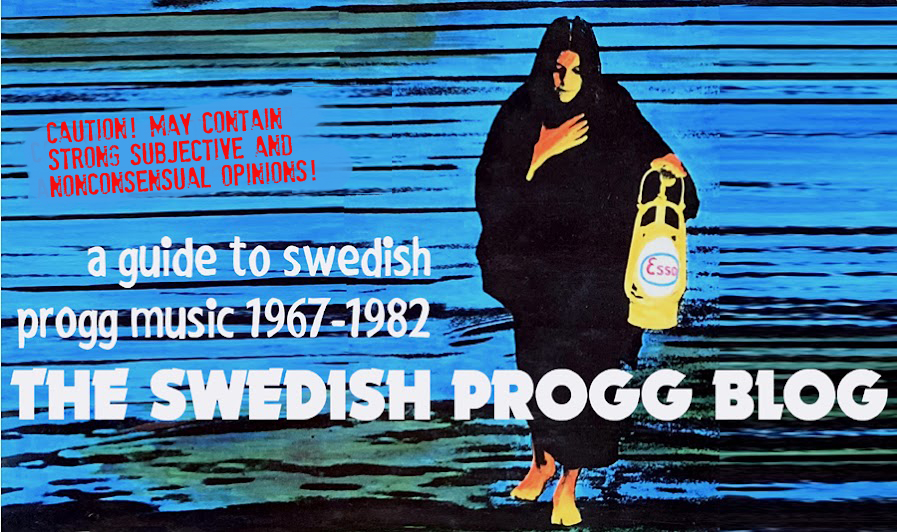
But when all of them played together, like in the early 70's, they achieved something out of the ordinary, something utterly amazing, timeless and indestructible. Nothing can weaken the light pouring out of ”Esso Motor Hotel” or the eponymously titled ”Arbete och fritid”, nothing can diminish the impact of the brooding ”Damen i svart” or the beauty of ”Vind” which ends the album in a state of elevated melancholia. The overall feeling is one of astonishing otherness, further accentuated by Örjan Hamrins eye-catching cover art.

A lot of people seem to prefer ”Arbete och Fritids andra LP” (whose title translates into the explanatory ”Arbete och Fritid's Second LP”) and that too is a majestic effort. Truth is that Arbete & Fritid never made a bad album. Even when slowly evolving into a different band through a number of personnel changes from the mid 70's until eventually calling it quits with ”Håll andan” in 1979, they consistently operated on a remarkable quality level. But in the early days, in the very beginning, with their debut album, they were far above everything and far ahead of everybody else, even themselves. ”Arbete & Fritid” is a true classic, rich with a vitality that will make it outlive us all.

Tuesday, September 4, 2018

ARBETE & FRITID – 3 collaborative albums

 
Slottsbergets hambo å andra valser (MNW, 1972)
as Rolf Lundqvist å Arbete Å Fritid
Swedish vocals, spoken word
International relevance: *
 
This is the first album of theirs co-credited to an external talent. Rolf Lundqvist was a poet and parts of ”Slottsbergets hambo å andra valser” are him reading pretty peculiar poems. He also sings to Arbete & Fritid's musical backgrounds of old timey dance music, rock paraphrases, tango, swing etc. It's more Lundqvist's album than Arbete & Fritid's and to be honest, it's not very good. But definitely one of the most puzzling entries in the band's catalogue.

Käringtand (YTF, 1976)
as Margareta Söderberg, Arbete Och Fritid/Pojkarna på Storholmen
Swedish vocals
International relevance: **
 
Margareta Söderberg is a folk singer who has appeared on several albums, mostly various artists compilations such as ”Alternativ festival”, ”Röd 1:a maj-fest” and ”Jordljus – Befria marken”. Pojkarna på Storholmen were a folk constellation who took their name from a Swedish 1930's movie and who, to my knowledge, never appeared on any other album than ”Käringtand”

Like ”Slottsbergets hambo” mainly is Rolf Lundqvist's album, ”Käringtand” is Margareta Söderberg's. Some songs are performed a capella in a traditional style that fit the album's folk concept, and Arbete & Fritid appears on only six of the thirteen tracks, and while Söderberg is a fine singer, it's Arbete & Fritid's participation that lifts the album. Particularly good is the last track ”Sången om Moldau” written by Bertolt Brecht and Hanns Eisler and features some very fine sax from Roland Keijser. 

A live recording of the Söderberg/Arbete & Fritid coupling can be found in "Progglådan", including the wonderful "Höstvisa" (made famous by Swedish/Finnish band Cumulus) not on the original album.

…Sen dansar vi ut (Hurv, 1977)
Instrumental
International relevance: **

With folk fiddler Anders Rosén at the helm of this double album (released on his Hurv label but released as Arbete & Fritid only), it's sometimes overlooked and dismissed as an inferior work of theirs, but is in fact very good. With the tunes presented in the same way they were recorded it follows a logical flow, getting more and more intense as it goes. The band's efforts are excellent and with Rosén being perhaps the best living fiddler in Sweden, it's an album so enjoyable it certainly should be counted among their regular releases and accordingly appreciated.

från Käringtand
Margareta Söderberg & Arbete Och Fritid Tonkraft
"Den bortsålda"
"Barn"
"Lärandets lov"
"Höstvisa"

Friday, August 24, 2018

ARBETE & FRITID – Arbete & Fritids andra LP (Sonet, 1971) / Arbete Och Fritid (MNW, 1973)

Arbete & Fritids andra LP (Sonet, 1971)
Instrumental
International relevance: ***

With such a phenomenal debut album behind them, it wouldn't be wise trying to repeat it, so Arbete & Fritid changed direction a bit for the follow up. Perhaps a bit simplifying, but if ”Arbete & Fritid” was an open-minded jazz effort, then ”Arbete & Fritids andra LP” is an open-minded folk album, with more tangible elements Swedish traditional music that fit in seamlessly with the group's overall sound of a modal foundation and drone qualities. It's a vastly elaborate piece of art with a mysterious glow of deep godfree spirituality. If anyone needs further proof of Arbete & Fritid's expansive magnificence after their maiden work, then this it it.

The album had a Record Store Day reissue but with boosted bass which unfortunately changed its character a bit.

Arbete Och Fritid (MNW, 1973)
Instrumental, Swedish vocals
International relevance: ***

Oddly enough, the band's third album is eponymous like the first, but musically it follows along their second with a strong folk influence. New to this album are the vocals on several tracks including ”Petrokemi det kan man inte bada i)”, an absolute killer track and very different to what you'd expect from Arbete & Fritid; so heavy, drony, shamanistic and forcefully ritualistic they out-Hawkwinds Hawkwind. Equally excellent is opening track ”Gånglåt efter Lejsme Per Larsson, Malung”, a traditional tune by way of fiddler Lejsme Per, beautifully combining melancholy yearning and soulful assurance. (I guess you could say that Lejsme Per comes in second after Hjort Andes Olsson among legendary fiddlers.) 

This is music to fill your heart with.

Friday, September 29, 2017

ARBETE & FRITID – Ur spår (MNW, 1975)

Instrumental
International relevance: ***

”Ur spår” is a different beast to the Arbete & Fritid albums preceding it, not only as far as the music itself goes, but also in terms of line-up. Drummer Bengt Berger and multi-instrumentalist Kjell Westling had left before the release of their third album ”Arbete & Fritid” in 1973, with the equally brilliant Bosse Skoglund taking Berger's place, and Tord Bengtsson filling the void caused by Westling leaving. For ”Ur spår”, Arbete & Fritid were augmented by Thomas Mera Gartz on fiddle, recently graduated from Träd, Gräs & Stenar.


Released in 1975, the album was recorded live in concert at Ludvika Music Forum in March 1974, and reveals an aspect of Arbete & Fritid rarely documented on record. Consisting of one continuous piece split between the two sides of the album, it emphasizes the jazz element of the band's music, allowing their improvisational chops to come through clearly. There's no other album in Arbete & Fritid's ouvre quite like this one. Like I've said elsewhere, they never made a bad album, but it's a pity that this particular, slightly more uninhibited side of the band is so under-represented in their output.


Often overlooked in favour of their first three albums, ”Ur spår” remains one of Arbete & Fritid's most underrated efforts, successfully bridging the gap (if there ever really was a gap) between them and Träd, Gräs & Stenar. Not only that, towards the end of side 'B', they beat Träd, Gräs & Stenar in their own drone groove game.


The cover art, courtesy of brilliant visual artist Channa Bankier, reflects the music perfectly, layered with the evocative mystique of the dark forest and the ambiguous pledge of the setting sun lighting up the imposing clouds. In short, all the inherent strengths of Arbete & Fritid here demonstrated to great effect, albeit in slightly different way than usual.

Thanks to Roland Keijser for kindly letting me use Johan Källgren's pictures from the actual "Ur spår" gig. 

Ur spår (side one)
Ur spår (side two)

Monday, September 17, 2018

A VARIOUS ARTISTS SPECIAL – 3 jazz compilations

Featured artists: Kustbandet / Arbete Och Fritid
Club Jazz 6 (SR, 1972)
Instrumental
International relevance: ***

”Club Jazz” was a series of nine volumes of radio recordings released on Swedish Radio's own imprint SR Records from 1970 to 1974, a jazz equivalent of sorts to the early 80's ”Tonkraft – Levande musik från Sverige” series. The featured artists were either given a full album or one LP side each, and the series captures performers such as Eje Thelin, Stefan Abeleen with Lasse Färnlöf, Opposite Corner and vocalist Nannie Porres. The most interesting volume from a progg perspective is also the one with the most bizarre coupling. The sixth installment has one side of Kustbandet's uninteresting trad jazz and the second one dedicated to Arbete & Fritid. The Arbete & Fritid part is Ove Karlsson's fantastic 20 minute track ”Ostpusten-Västpusten” in its entirety, recorded at Uppsala Stadsteater in April 1972. It's Arbete & Fritid at their gorgeous best, and thankfully the track was resurrected as a bonus track on the CD reissue of their third album making it easier to obtain (and easier to avoid Kustbandet).

Jazz från det svenska 70-talet (Caprice, 1974)
Featured artists: Kustbandet / Jazz Doctors / Rolf Larsson & Jack Lidström Dixieband / Ove Linds Kvartett / Björn Milder / Umeå Big Band with Benny Bailey / Peps Blues Band / Gugge Hedrenius Big Blues Band / Lars Gullins Kvintett / Nisse Sandströms Kvartett / Lasse Werner och hans vänner / Nannie Porres Kvintett / Stefan Abeleens Kvintett / Arbe Domnérus Kvintett med Rune Gustafsson / Arbete & Fritid / Bernt Rosengrens Kvartett / Rena Rama / Egba

International relevance: **
Instrumental, English vocals

The title means ”Jazz from the Swedish 70's” and features a wide stylistic range, from the blues of Peps Persson to the fusion of Egba, from the dixieland stomp of Kustbandet to the post bop of Bernt Rosengrens Kvartett. So it serves its purpose of being a non-discriminating catalogue of contemporary jazz but it's also an incredibly frustrating spin if you listen to it all way through. But with such an array of styles, there are of course worthwhile moments. Fans of vocal jazz should be delighted by Nannie Porres's take on ”Willow Weep for Me” – after all, she's the second finest Swedish jazz vocalist after Monica Zetterlund. The contribution from the aforementioned quartet led by Bernt Rosengren is good and lively. Rena Rama makes one of their best vinyl appearances with ”Daisy Lee McGhee” – probably the best selection on the album, and better than Arbete & Fritid's bluesy but unsatisfying ”En solig dag på landet/The Big Bad Bag of Baba-Louie”.

Det nyJAZZte från Göteborg (Caprice, 1977)
Featured artists: Mount Everest / Opposite Corner / Mwendo Dawa / Soffgruppen

Instrumental
International relevance: **

Another Caprice Records release, this time showcasing the talents of the mid 70's Gothenburg jazz and improvisation scene. Mount Everest (as a trio) has a great Coltrane fuelled medley of ”Black Snow” and ”Sherpa Dance”, Mwendo Dawa is a little too close to fusion for my comfort, Opposite Corner is good, while Soffgruppen isn't quite as great as on their album.

Sunday, September 9, 2018

ARBETE & FRITID – Se upp för livet (MNW, 1977) / Håll andan (MNW, 1979)

Se upp för livet (MNW, 1977)
Instrumental, Swedish vocals
International relevance: ***
 
One of Arbete & Fritid's weakest. Roland Keijser had left the band at this point, taking most of the jazz with him, and leaving the leadership to cellist Ove Karlsson under whose direction the band took a step closer to rock, or at least rock related music.

The music on ”Se upp för livet” is pretty diverse though, ranging from the plain bizarre (”Knoga och knega” and ”Avdelning - indelning” ) to the downright spooky (”Jag är inte som andra”), from the eerie opening drone of ”Födelsemusik” to the hard rock of ”Lev hårt - dö ung” (sounding like a crossbreed of Nationalteatern and Gudibrallan). A lot of the album sounds like a Thomas Mera Gartz solo album on one hand and a Träd, Gräs & Stenar album on the other (Gartz and Torbjörn Abelli appear on ”Se upp för livet”). The atypicalities of the album might be explained by the fact the music were made for an exhibition at Kulturhuset in Stockholm 1976, and probably had to fit in with the exposition's concept. It would probably have been a better album had it been trimmed down to a single disc, but it's still worth having for the good bits.

Håll andan (MNW, 1979)
Instrumental, Swedish vocals
International relevamce: ***

The last album to be released by Arbete & Fritid is still stylistically sprawling but nevertheless a more cohesive effort than ”Se upp för livet”. Here you find the almost-punk burst of ”Jag föddes en dag”, the dreamy ”Dorisk dron”, the elevated jamming of ”Thulcandra”, and the experimental and slightly creepy ”Kalvdans”. I've always had a soft spot for this album and although it's not really comparable to the early Arbete & Fritid albums, it's certainly a recommended effort.

The ”1969-1979” CD comp, later retitled ”Deep Woods”, features three good and otherwise unavailable tracks from 1978. There's also a unique (albeit not very good) and still unreleased Tonkraft show from December 1979 worth snooping around for by Arbete & Fritid and Archimedes Badkar joining forces.
 

Thursday, August 23, 2018

NYA LJUDBOLAGET – Nya Ljudbolaget (MNW, 1981)

International relevance: ***
Instrumental, Swedish vocals

Ranked #13 on the blog's Top 25

Nya Ljudbolaget's name means ”The New Sound Company” in English and implies there was an old Sound Company too and there was. Before the late and sorely missed cellist Ove Karlsson joined Arbete & Fritid, that was his band. With Arbete & Fritid's last album ”Håll andan” being released in 1979, Karlsson was free to resurrect his old outfit, now with Samla Mammas Manna drummer/percussionist Hans Bruniusson, Samla relative Kalle Eriksson on trumpet, saxophonist Ulf Wallander (Ramlösa Kvällar, Samla Mammas Manna, Renhjärta et al), and on one track, Marie Selander on vocals.

”Nya Ljudbolaget” is like an extension of late era Arbete & Fritid, with a drone foundation supporting the sometimes Eastern, sometimes Swedish sounding melodies. But the album has more on offer than just that; "Chal Chal Chal" and the three-part suite ”Cellohalling/Putenska marschen/Ramlösa mammas fritid” have a strong air of Samla Mammas Manna and other RIO bands; ”Continuum Prometheus” is Terry Riley styled minimalism, while ”Minnesvisa” sounds like an old mournful Swedish folk song (but isn't). The entire album is wrapped in a dark kind of shimmer, wonderfully evocative, and should be considered mandatory by Arbete & Fritid fans, particularly those with an admiration for their later post-Roland Keijser period.

Saturday, January 26, 2019

ROLAND KEIJSER IN MEMORIAM 1944-2019

It is with a hurting grief in my heart and a pain in my soul that I share the news of Roland Keijser's passing. The loss is unmeasurable on so many levels I hardly know where to begin. Maybe by saying what everybody who ever heard him play already know: He was a true master musician. One of those who could make me pick up an album if his name was in the credits. Because he always played the truth. The instrument – no matter if it was the saxophone or if it was a flute from faraway lands – was always an extension of himself. He played like a spiritually enlighted philosopher, phrasing his knowledge of man and music with the immediacy of genuine honesty. He was always on a different level than everyone else. He played like Roland Keijser, and Roland Keijser only. He was a meaningful Musician, always demonstrating the innermost comprehension of Music.

He was also my friend. No, we never met in real life, but we exchanged a vast number of messages and letters over the years. Our Facebook conversations were often long and sometimes intimate, almost in a hushed way. We didn't so much write as we spoke to each other, even if the voices we used were those of the written word. Sometimes we quarrelled – I'm an outspoken person and so was Roland. I wasn't afraid of telling him straight when I thought he was completely off on some topic, and he wasn't afraid to tell me if I have crossed the line of civility. Friends can do that and still be friends when there's a sincere, mutual respect.

But most of the time, we had similar ideas and during our extensive conversations, we touched on a wide array of topics. Even when agreeing with each other, we could make the other person consider other possibilities, calibrating our opinions, shifting our perspectives. Talking to him about Blå Tåget and Arbete & Fritid often generated a tsunami of memories, opinions, historical facts that was impossible to find anywhere else. He narrated his own past, and I eagerly sucked up every drop of information he humbly provided me with.

And he never gave up. During his last months, he battled the big C, but he kept on working. He told me he was busy making new music, and just before his passing, he uploaded a set of brand new recordings to Youtube. A farewell gift to his fans and friends? Probably. He stoically faced his fate, he knew he wasn't able to fool the grim reaper. But he died so fully living that the circumstances allowed him to. He never stopped being a Musician. The full Keijser discography is voluminous; the Arbete & Fritid and Blå Tåget albums are just a little part of something much, much bigger. It's always an interesting listen, often illuminating, never irrelevant.

But it was Arbete & Fritid that introduced me to his music. That particular band was instrumental (no pun intended) in igniting my interest in progg. If you will, Roland Keijser was crucial to the birth of this blog. Without him, this would likely never have happened. His music so often revealed the invisible to me. And I can't stop listening. Arbete & Fritid's first album still moves me in a way few other albums do. It phrases things that the spoken or written language can't fathom. His music, old and new, is indestructible. Resistant to time. It's music that channels the eternity while being an indisposable part of it. Thus, it will never be forgotten, Neither will its creator.

May you rest in peaceful spheres, Roland, and from deep within my heart, thanks for everything you've done for me!

Sunday, August 10, 2025

GROWING MUSIC WITH DON by Bengt Berger

When I first planned my overview of Don Cherry's Swedish albums more than a year ago (which was then delayed for several reasons), I thought it needed some more depth than I could possibly give it myself. I figured I needed an eyewitness report from someone close to Cherry during his Swedish years, or better yet: someone who actually played with him. I couldn't possibly think of anyone better than drummer par excellence Bengt "Beche" Berger. He happily agreed to do it, and I sent him a set of questions. I thought it would be a simple little Q & A – he indeed generously answered all my questions, but in the shape of what very well can be called an essay on his years with Don Cherry, with many and valuable peeks into the creative process. (I only translated it.) A massive THANK YOU to Bengt Berger who graciously took the time to provide us with this!

Don Cherry iwith Bitter Funeral Beer Band in 1982

I had of course heard Ornette's quartet already, but the first time I saw Don live was with Sonny Rollins's quartet at the Stockholm Concert House in January 1964. A house next door was on fire, so there was smoke in the hall and they did a fantastic gig. I still listen to the tape I made of the radio broadcast every now and then. [Jazz presenter] Olle Helander aired just about every show at the Concert House. It was a fantastic concert, Don didn't play a lot, mostly tossed in a phrase here and there och joined in with the free handling of themes. Rollins played continuously and was marvellous. Henry Grimes on bass and Billy Higgins on drums. Listen to the show! Don later told me that after the concert, Moki told him to come and look at her paintings in the next room but there she turned out the light, and that's how they met.

Next I heard Don's European quintet with J.F. Jenny-Clarke, Aldo Romani, Gato Barbieri and Karl Berger at the Golden Circle [a legendary jazz venue in Stockholm] a few years later. Moki was up front in the audience. That too was fantastic but for some reason, I only saw them one night. I wonder why – when Charles Lloyd's first quartet with Keith [Jarrett], Jack [DeJohnette] and Cecil McBee played at the Circle I saw them every night for two weeks.

At Embassy at Sturegatan [in Stockholm] I heard the trio with Johnny Dyani and Okay Temiz. When Don played a little phrase on a wooden block and sang ”kukorokoko” and paused, I responded from the audience. But it might have been after we met in Uppsala, because Okay had his ordinary drum kit there and that was before he got his giant darbuka drum kit. 

Don and Beche in The Dome 1971

I had started playing with Arbete & Fritid and we had one of our earliest gigs at Norrlands Nation in Uppsala. We shared the bill with Don Cherry who was there with Bernt Rosengren's quartet with Tommy Koverhult and Leif Wennerström. Tommy Koverhult was in the back room before the gig and changed springs and pads on his sax, and when Don heard I play the tabla he told me to sit in with them. I was just back from India, but for some purist reason, I never used them in Arbete & Fritid. And finding tablas in Uppsala on such short notice was impossible, so I never sat in with them that night. But both bands played some fine music that night.

We often played in Stockholm around that time, and it sometimes happened that you could hear Don play along in the middle of a song. He sneaked up on stage behind us, played along for a while and then disappeared. It happened several times with Arbete & Fritid but also when I played with for instance Handgjort, maybe at Gärdet.

But then came The Dome at the Museum of Modern Art. The Cherry family lived in an old bunkhouse next to The Dome, and they spent whole days in The Dome. Moki sewed and painted and Don played with those who came there, and a lot of people did. When I was there, he told me to bring the tablas so I did and we played there every day after that. Moki played the tanpura and Don sang, played the trumpet, flute, a little gamelan or whatever was at hand. A grand piano and Okay's drums were there too, so we used these a lot too.

Don and Beche in The Dome 1971

I can't remember exactly when they bought the schoolhouse in Tågarp, but it must have been around the time when they had just moved there that he asked me to come along. We drove down there, Don, me and Gittan [Jönsson] that would become my girlfriend a few years later. She did a very nice little painting on a log of wood showing how we filled up gas late in the evening on our way down. I think it's still there.

Always when in Tågarp, I stayed in a little room in the attic, it was very cozy. An old schoolhouse is a very harmonious building with its square classrooms at each end and the teacher's residence in-between. They fired up a stove in each schoolroom, one was Moki's atelier and the other was the music room where we also ate and socialized.

Don, Eagle-Eye and the old schoolhouse in Tågarp

Moki had painted the piano in beautiful bright colours and next to it was [Don's son] ”Eagle-Eye's drum kit”. When it was us only, we played piano and drums, lots of Ornette themes that Don played over and over again while I played along in full blast. It NEVER happened that he told me what to play. I always played exactly what I wanted (and I've tried doing so ever since). I could try to catch the melody and learn it, play along with it, but I could also play against it and around it. At first he would play the same thematic turnover forever, and then he played some kind of rhythmic harmonic accompaniment based upon it. My understanding of Ornette's harmolodics is that you construct a chord over an optional number of notes of the melody, and how many notes you choose defines how large the chord will be. You decide for yourself when you create a new chord from a different chunk of the melody. The chords will be different for each melodic section. Anyway, that's how I perceive it. It would have been interesting hearing Ornette himself play over a piano comp like that. Oh, by the way, sometimes Don could give me a sign that he wanted me to play a fast comp on the cymbal, it added brilliance. He gave a cymbal comp sign with his hand. But that was the only instruction he ever gave me.

Or we could play tablas, wooden blocks or some other smaller percussion instruments, and flutes, trumpet, vocals or whatever. Then we were in some kind of Asian territory. Tibetan music also figured. I showed him ragas, scales, and we made up melodies/songs/ways of playing together. Later on they could show up during concerts or at workshops. Don loved to learn and when I gave him his first tabla lessons, I was taught a huge lesson myself. I gave him the first lesson, and then we sat playing together but not like doing the homework – we played music! We could play it over and over again but not as an excercise in order to go on to something new after that – this was the actual creating of music! I had never understood that before, and only occasionally experienced it later.

Beche, Don, Eagle-Eye and Christer Bothén in 1974

My second great piece of learning was the way we treated ”the reportoire” in concert. Case in point: We had a gig at [jazz club] ArtDur, later Nefertiti, in Gothenburg. Bernt Rosengren and I came down from Stockholm, Don from Tågarp, while Christer Bothén already lived in Gothenburg. Don't think we had ever played with that line-up before. We get there, unpack our instruments and start rehearsing on stage. Don plays just like he does when it's just me and him in Tågarp. He picks up a theme and plays it round and round while the others try to learn the tune. All of a sudden he changes to a different theme or a different instrument. Perhaps he sits down at his harmonium. I switch to mridangam, Christer to a donsu'nguni, Bernt maybe to a taragot, and something new takes shape. So it changes; in the middle of a solo Don might switch to a completely different song and you just have to follow along. Either you know the theme, or you try to learn it while playing. All of the time we're making music fully focused. After having kept going for an hour or two, they let the audience in and we keep going without a break or without starting over. After another hour, we might stop or take a break only to start in a while again.

This method of not necessarily playing a song from beginning to end but to change it altogether when you feel like it is something I have tried to practice with all bands I've played with, but with the difference I want everyone in the band to have that same possibility. I think it probably worked best with Berger Knutsson Spering, maybe three people are realistically the best, but it of course depends on who you're playing with. In our case we also allowed ourselves to pick up a song in any tempo or in any style at all, but also refuse to change if someone didn't want to. It can go far but it can also go to hell and that's of course exciting.

* * * 

The photos are taken by unknown photographers and come from countryandeastern.se, all used by kind permission of Bengt Berger.
Sunday, March 1, 2026

ROLAND KEIJSER KVARTETT – Öppet Tre (Caprice, 2025; rec. 1968-69)

 
Instrumental
International relevance: ***

This third volume of Caprice Records' vinyl only "Öppet" series is a highly interesting outing with late 60s recordings by Roland Keijer's quartet. (Volume 1 is reviewed here with some background info on the series.) This is the seed that would soon grow into Arbete & Fritid, with Torsten Eckerman on trumpet and piano, Bosse Skoglund on drums, and fleshing out the line-up, the meritorious bassist Staffan Sjöholm. The four tracks were all recorded in Stockholm at different spots and dates in 1968 and 1969. The sound characteristics differ a bit between the tracks, but the quality is good to very good throughout.

Three of the tracks are long, from 10 to almost 20 minutes with only ”Sommarromans” being around the three minute mark. The recordings are a testament to Keijser's jazz origins and also reflect his love for both Albert Ayler and Ornette Coleman, rich with a cheeky, melodic playfulness. Childlike melodies and phrases reccuringly lighten up the crosspollination of free jazz and post-bop. Here and there you can sense ideas and snippets of what would come with Arbete & Fritid, most obviously in ”The Big Bad Wolf Of Baba-Louie” which exists in an Arbete & Fritid recording on the V/A compilation ”Jazz från det svenska 70-talet”. The version here however sounds a bit tentative and meek in comparison.

The value of ”Öppet tre” doesn't rely on historical importance alone. It's a very good album in itself and a beautiful example of late 60s Swedish jazz when the genre was slowly opening up to a plethora of influences and the rich structures of the 70s in which Roland Keijser had a crucial role. It may not knock me over like the previous Nisse Sandström volume does, but it's nevertheless a mandatory installment in this series. I only wish someone will step forward and release more early Keijser material. 

Full album playlist 

Friday, December 14, 2018

VARIOUS ARTISTS – Alternative Instrumental Music (Caprice, 1980; rec. 1970-1978)

Featured artists: Kebnekaise / Arbete & Fritid / Bo Hansson / Fläsket Brinner / Tillsammans / Samla Mammas Manna / Spjärnsvallet / Iskra / Archimedes Badkar / Anita Livstrand / Ramlösa Kvällar
Instrumental 
International relevance: ***

An excellent if redundant compilation in Caprice Records' ”Music In Sweden” series. This is volume 7 and just like the title says, focusing on instrumental progg. All tracks are taken from previously released albums so there's nothing exclusive here. But, as a cream-of-the-crop overview, it's carefully selected and sequenced, with great numbers from the likes of Kebnekaise (from their second, invincible album and before their changed their spelling to Kebnekajse), Arbete & Fritid, Fläsket Brinner, Archimedes Badkar, Anita Livstrand, Spjärnsvallet and Bo Hansson. Pretty much the go-to album for a progg newbie interested in the non-vocal side of Swedish progg, as well as a thoroughly enjoyable disc to the ears of the already converted.

Friday, September 14, 2018

A VARIOUS ARTISTS SPECIAL – 3 regional compilations

HOPKOK (Partille Musikförening, 1975)
Featured artists: Akropolie / Impros / Varde Ljud / Måttbandet / Medium
Swedish vocals, instrumental
International relevance: **

Released in Gothenburg suburb Partille, featuring five local acts mostly in the progressive and symphonic vein. None of them is very interesting, the best being Medium with a slight krautrock vibe and lots of guitar/organ jamming.

JORDLJUS – BEFRIA MARKEN (Jordljus, 1978)
Featured artists: Lillemor Lund / Jordbandet / Mullvadarna / Lillen och Göran / Bank I Väggen / Margareta Söderberg, Margareta Van Gilpen & Sara Söderberg / Hagamal / Christer Öhrman
Swedish vocals, spoken word, a capella
International relevance: **

This private pressing (in an edition of 1,200) was a fund raising release for Jordfonden, an association of people known as Jordfolket ('the Earth people') wanting to buy some land to set up a hippie styled agricultural commune as an alternative to the modern industrial society.

The album has a distant Arbete & Fritid connection, with Margareta Söderberg who had the ”Käringtand” album out in 1976 with them backing her up, and Lillemor Lind whose album ”Hjortronblom och kärleksört” features several Arbete & Fritid members.

”Jordljus – Befria marken” consists of mainly folk and folk rock, all of it with a homemade vibe and some of it political sounding. Most of it isn't very good, but a couple of Jordbandet's contributions are OK, and Bank I Väggen's ”Springlek” is instrumental and acoustic folk rock somewhat reminiscent of Arbete & Fritid/Anders Rosén's ”Sen dansar vi ut”.

MUSIK I TANUM -80 (Tanum Skivristningar, 1980)
Featured artists: Pertinax / Björn och Tomas / Baltix / Nibokas / Siv och Sixten / Milda Makter / Henry och Einar Hedström / Marie Stensby / Hans Fromén / Bengt och Nisse / Andrea Ehnebom / Lur-Gunnar / Bohus-Dals Dragspelsklubb / Kalle i Kalleby / Kville Kyrkokör / Maud Tretom / Ärter Och Fläsk / Märta Thorwall / Aröette Chené Wiklander / Kurt Wiklander / Johan Johansson / Backa Skola, åk 3 / Kent Andersson / Gitarrkvartetten / Sara Reimbert / Gerlesborgslägret / Jazzgruppen / Muzzle
Swedish vocals, English vocals, instrumental
International relevance: *

Released in Tanum north of Gothenburg famed for its many impressive rock carvings – more impressive than this album for sure. Only one track is interesting from a progg perspective, ”Bibbi” by mediocre symph rockers Pertinax. The rest is unexciting jazz, school bands and classical music.

From Jordljus - Befria marken:
Jordbandet - Framåt tillsammans

Friday, August 1, 2025

LILLEMOR LIND – Hjortronblom och kärleksört (Proprius, 1978)

 
Swedish vocals, a capella
International relevance: **

Lillemor Lind is a Dalecarlian singer who made her debut on record on the ”Tjejclown” album in 1974. She wrote one of the songs on Lena Ekman's second album in 1980 and also contributed some recordings to a couple of folk albums around the same time. Her full length solo debut came with ”Så draga vi upp till Dalom igen”, with songs from her native Dalarna region, something she passionately researched beside her singing. Lind also had a thorough interest in foreign musics, particularly from Latin America, the Near East and the Balkans as reflected by the two Macedonian songs on ”Hjortronblom and kärleksört”. Both her albums were released through Proprius, known to blog readers from Leif Strands Kammarkör, Lena Granhagen and Elisabet Hermodsson, meaning they have a very particular ambience.

”Hjortronblom och kärleksört” is Lind's most interesting album thanks to the musicians involved. It features Arbete & Fritid key members Roland Keijser and Ove Karlsson, as well as fiddler Anders Rosén who made several albums with Keijser plus took a leading role on ”Sen dansar vi ut”. (A further Arbete & Fritid connection is Rolf Lundqvist who took the group photo on the album cover.) Also present are members from jazz outfit Opposite Corner.

The sound and the arrangements are wonderfully moody and the songs– both traditional and original – are beautiful and melancholy with a prominent archaic character. The main problem is Lillemor Lind herself. Her vocal style has a kind of preciosity to it, as if she was classically trained and had lost some touch with the vernacularity of the songs. It's not a constantly up front problem, but you can always sense it under the surface and now and then it comes through. That spoils it somewhat for me and I can't help but imagining what this would have been like had Marie Selander or Lena Ekman been in Lind's place. As it stands now, it's an intrinsically great album that never reaches its full potential.

Full album playlist

Thursday, December 20, 2018

ANDERS ROSÉN & OVE KARLSSON – Låtar med Anders Rosén och Ove Karlsson (Hurv, 1979)


Instrumental
International relevance: **

A rarely seen album with a tight Arbete & Fritid connection. Ove Karlsson was of course one of the most prominent members of Arbete & Fritid, while folk fiddler Anders Rosén joined them for their 1977 double album ”...sen dansar vi ut”, like this album released on Rosén's Hurv label. Here Karlsson provides cello, zither and guitar, while his compadre sticks to a fiddle with sympathetic strings. The combination of fiddle and cello in particular adds baroque sounding characteristics to these original Rosén pieces which is very pleasing to listen to. And both participants are of course class 'A' musicians with good ears for complementing interplay.

While not a surefire recommendation to people not used to music deeply rooted in traditional tunes and folk fiddling, the album has a fine atmosphere with plenty of droning qualities that might appeal to fans of ”...sen dansar vi ut”.

The front cover drawing is by Anders Rosén's daughter.

No links found.

Friday, February 13, 2026

BENGT BERGER / ROLAND KEIJSER / KJELL WESTLING – The Vedbod Tapes / More Vedbod Tapes (Country & Eastern, 2012; rec. 1977)


Instrumental
International relevance: ***

This is such a beauty of a record! Beautiful for so many reasons. A unique document of a candid process reserved for the involved musicians only, secret to outsiders. A truthful representation of the naked creativity and mental interplay between a few select performers.

The select performers in question are three close friends that all have (or had, with two of them now sadly gone) a thorough track record. If you want to oversimplify it, you could conveniently express it as: Arbete & Fritid. Drummer/percussionist Bengt Berger, reed player Roland Keijser and multi-instrumentalist Kjell Westling were all part of the line-up for the first two Arbete & Fritid albums. It's fair to see them as a crucial co-founders of Swedish progg even in its narrowest sense.

The recordings on ”The Vedbod Tapes” were never made with an official release in mind. They were more of a memento for the three longtime buddies, a documentation of a friendly get-together in Roland Keijser woodshed. ”Vedbod” means ”woodshed” in English, and apart from the literal meaning, ”woodshedding” is an old jazz term for jamming. Keijser sheds (some) light on the origins of the recordings in his liner notes: ”We usually refer to this unique document as 'the Vedbod tapes'. The circumstances are not crystal clear, but the fact is that all of the music was recorded in a woodshed in south-west Dalarna in 1977. /.../ The 'archaeological digs' for the Vedbod tapes recently acquired a new urgency, and were further intensified after the sudden – too, too soon! – death in the autumn of 2010 of Kjell Westling. /.../ The music, in general, sounded good. a little sound-technique polishing but no real editing was done to these findings, we kept the documentary approach preferring to keep too much rather than too little. Ah, this is how it could sound, once upon a time, in certain Swedish realities. /.../ What do we play? Apparently free from the heart, memory and imagination. Mostly collective improvisations. But also a couple of Ornette Coleman tunes, some popular songs, the odd polska, waltz and halling, a few tango bars… But, above all, sundry lengthy chunks of unidentifiable inventions, the names of which are known only to the woodshed.”

Key words: ”free from the heart”. The trio had no rules to follow; it's like a free-flowing heart-to-heart conversation that needed no restrictions but relied on perfect equality. That's part of what makes these tapes so fascinating and rare. It's free music but on even deeper levels than as in for example ”free jazz” because it refers to more than just musical characteristics. It's the unfettered sound of a deep friendship.

Although all three of these master musicians contribute democratically to the process, the greatest triumphs belong to Kjell Westling. Although he was always happy to adapt to the prerequisites of circumstances known to the studio musician and did so with ease, here he really threw himself into the open-ended expression. If it came out as a folk fiddle or a wide open jazz jam didn't matter; he was free to follow his fancies without narrow considerations, and it's wonderful to hear. In many ways, I find this to be his grandest moments on tape because you can really hear him for all that he was – and that was a lot.

The CD features 70 minutes selected from hours of tapes, but Country & Eastern released another half an hour of digital extras in conjunction with the CD. The main portion of ”More Vedbod Tapes” is made up by the 26 minute jam ”Woodshedding 3” which in many ways is the distillate of everything that was going on during those days in Keijser's secret garden shed. Without a pre-set plan, Keijser, Westling and Berger move effortlessly between jazz, folk melodies and unprejudiced jamming, led only by their hearts, souls and deep understanding for each other. Like I said before: this is what a true friendship sounds like. 

The Vedbod Tapes full album playlist 
More Vedbod Tapes full album playlist
 

Thursday, July 31, 2025

OPPOSITE CORNER / PALLE DANIELSSON -6- – Club Jazz 5 (SR, 1971)

 
 Instrumental
International relevance: ***

The ”Club Jazz” series was a series of nine volumes of jazz recordings made for Swedish Radio between 1970 and 1974, a bit like a jazz equivalent of the three ”Tonkraft” double LPs released in the early 80s. The albums were usually split between two artists, one per side, and not all couplings made sense. There's for instance one album with Arbete & Fritid on one side and trad jazzers Kustbandet on the other. ”Club Jazz 5” has a better match, with a very early Opposite Corner recording and one by a rare sixpiece line-up led by bassist Palle Danielsson.

This session with Opposite Corner is five years earlier than their proper debut album ”Jazz i Sverige '76” and a bit different. It's not full on free jazz wild but they let loose a bit more here than they did later on. And it's much better! The Arabic scales in opening track ”Ayazin” is very tasteful, and Gunnar Lindgren delivers some fine tenor sax soloing in ”Blacklouti Strikes Back”. Last track from them is ”Tibetanskt urindop” and is probably as close Opposite Corner ever got to Arbete & Fritid. A very good session, well worth hearing even if you're not into their later work.

Turn the record over and you find four tracks from Palle Danielsson's band. This is where it gets really interesting. Featured here is an all star cast of Lennart Åberg, Bobo Stenson, Jon Christensen, Bengt Berger and Roland Keijser along with Danielsson himself! A highly vivid session with Berger in particular going bonkers on the drums – it's among the most ferocious drumming I've heard from him, and it's interesting to note that this was recorded in the same year as Fickteatern's ”Allt växer till det hejdas” which also has some mad Berger playing. But the ensemble effort is great all through, and I really wish there were more recordings from this particular lot.

So with two unique and splendid sessions, this is one for the ages.

Full album

Wednesday, August 29, 2018

VARGAVINTER – Vargavinter (Silence, 1976) / Röster från alla land (Ett Minne För Livet/MNW, 1980)

Vargavinter (Silence, 1976)
Swedish vocals, English vocals, other languages, instrumental
International relevance: ***

After the demise of Låt & Trall, singer Marie Selander became part of 'super group' Vargavinter, featuring members from Archimedes Badkar, Iskra, Södra Bergens Balalaikor, Spjärnsvallet and, through Kjell Westling, Blå Tåget/Arbete & Fritid and others. And not to be forgotten, the brilliant Anita Livstrand.

The title of Vargavinter's second album is ”Röster från alla land”, ”voices from all countries”, and that's a good description even of their live recorded eponymous debut. Vargavinter performed music from just about all around the globe. They were a bit in your face politically but the multitudinous music is often great. It is a bit uneven, with two or three of the songs sounding as if they're there mainly to fill the geographic quota, but  ”Snart” and the atmospheric ”Rumänsk dansmelodi” for instance are very good.

Röster från alla land (Ett Minne För Livet/MNW, 1980)
Swedish vocals, other languages, instrumental
International relevance: ***

”Röster från alla land” appeared four years after ”Vargavinter” and despite being recorded in the studio, the music sounds looser, or if you will, less focused. Still some good tracks such as ”Bågskytten”, ”Dans från Zalongou” and ”Det omöjliga”, but ”Röster från alla land” lacks a lot of the debut's freshness.

”Progglådan” has a 1980 Vargavinter Tonkraft session, and a mid-70's live version, also made for Tonkraft, can be heard on the double LP ”Tonkraft 1975-76: Levande musik från Sverige”.

Vargavinter full album playlist

Röster från alla land full album playlist
Tonkraft 1980 full album playlist

Friday, July 27, 2018

SKÄGGMANSLAGET – Pjål, gnäll & ämmel (Sonet, 1970) / Snus, mus och brännvin (Sonet, 1971)

Instrumental, Swedish vocals, other languages
International relevance: **/ **

Skäggmanslaget was one of the best known folk music groups, partly due to their involvement with Contact, playing on their best known track ”Hon kom över mon”. They also worked with accordionist Leif ”Pepparn” Pettersson on his 1973 album ”Nää, nu jäsicken!” and others, and they released a number of albums of their own. They were serious about what they did, but had a more easygoing approach than, for instance, Norrlåtar.

”Pjål, gnäll & ämmel” was their first album and nicely demonstrates their abilities. Apart from core members Peter Logård, Thore Härdelin and Wilhelm Grindsäter, Kjell Westling joins in a couple of tracks, as do noted singer Marie Selander. Contact makes an appearance here, backing Skäggmanslaget on the excellent closing track ”Gråtlåten” – what a pity they never made a full album together!

”Snus, mus och brännvin” followed suit in 1971, again with a guest appearances from Kjell Westling along with Bengt Berger, Urban Yman and nyckelharpa player Ceylon Wallin. It's an even more self-assured album than its predecessor. A fun take on famous Swedish tune ”Trettondedagsmarschen” almost sounds like a cheerful Arbete & Fritid recording features tablas, as does ”Polska efter Nils Hägg” which rounds off the album in a nice way. 
 

Thursday, October 12, 2017

AVGRUNDEN – Nu närmar vi oss... (MNW, 1975)

Swedish vocals
International relevance: ***

Malmö band Avgrunden had been around for two years when MNW released their first and only album ”Nu närmar vi oss...” in 1975. When Blå Tåget disintegrated after releasing ”Slowfox” in 1974, some thought Avgrunden were those most likely to follow in Blå Tåget's footsteps. Perhaps it was the use of clarinet that tricked people into thinking that, because Avgrunden have little to do with Blå Tåget. Their music is indeed diverse just like Blå Tåget's, but Avgrunden were a tighter band and their music was more fluent.

It's a pity that ”Nu närmar vi oss...” is such a neglected effort – it's one of the lesser acknowledged albums most worthy of a wider attention. The songs are well crafted and melodic, often beautiful with poetic sensibilities. As one might expect from the album cover with a red star attached to the Swedish national flag, the lyrics are political but not in that yell-in-your-face fashion known from many other, overtly political bands of the era. The message never gets in the way of the music. The vocals blend in nicely with the music, creating a cohesive and very engaging whole, thorough but not overdone.

For want of a better word, ”Nu närmar vi oss...” is in a folk rock style, but it has too many facets to comfortably pinpoint really. There are touches of psychedelia (”Skräckfärden”) and even tango (”Datamaskin”). Sometimes they remind me of Samla Mammas Manna, as in opening/closing track ”Signaturen”, and sometimes of Thomas Wiehe (not only because of the Skåne dialect).

Singer and multi-instrumentalist Raimo Juntunen actually appeared with Thomas Wiehe in the much debated children's TV series ”Vilse in pannkakan” in 1975, as well as on Wiehe's fine and under-appreciated ”Tårta och raketer” from 1977. In 1985 Juntunen teamed up with Björn J:son Lindh in Triangulus along with members of Ragnarök, Samla Mammas Manna and Arbete & Fritid.

Clarinet player Sven-Olof Lorentzen became a prolific author following Avgrunden's demise. His works include novels, children's books and theatrical plays.

"Skräckäventyr" + "Gamsången"
"Skånehöst"

"En annorlunda sommarvisa"