Showing posts sorted by relevance for query sabu martinez. Sort by date Show all posts

Tuesday, August 20, 2024

SABU MARTINEZ – The Dalecarlia Recordings (Mellotronen, 2009; rec. 1971-72) / Burned Sugar (Mellotronen, 2008; rec. 1973-74) / Maldito Primitivo (Mellotronen, 2009; rec. 1977) / SABU MARTINEZ & SAHIB SHIHAB – Winds & Skins (Mellotronen, 2008; rec. 1967/1978)


Instrumental, other languages
International relevance: **

Sabu Martinez's 1971 album ”Afro Temple” is obviously some kind of classic, but I find most of it dull percussion excesses with some spoken word over and some dashes of Latin jazz. So I was less than thrilled approaching a full set of four albums released on Mellotronen, covering Martinez's Swedish years.


Martinez moved here in 1967, and the earliest disc in the Mellotronen lot features recordings from that year, with saxophonist/flautist Sahib Shihad and made for the Swedish Radio. One of '67 tracks is only a spoken word piece on 'the theme of good and bad service'. The other one is an OK but unspectacular five minute jazz piece with Palle Danielsson on bass. The 1978 session, also for the Swedish Radio is slightly better with the half-bizarre ”The Distorted Sioux Indian” being an at least interesting little piece next two boring percussion solos.

Stemming from four different sessions, "The Dalecarlia Recordings" opens with thirteen very long minutes of another percussion workout, "The Latin Percussion People", which isn't a good start, but it picks up the steam soon after that. A selection of tracks from the 1971 album "Aurora Borealis" with Björnbobandet works up a great groove, and although I'm not too keen on big band stuff, these tracks are quite good. My favourite track however is "Puertorican Beans And Rice". The sound is murky but it reeks with so much vitality not even the quesionable fidelity can take anything from the contagious vivacity of the moment.
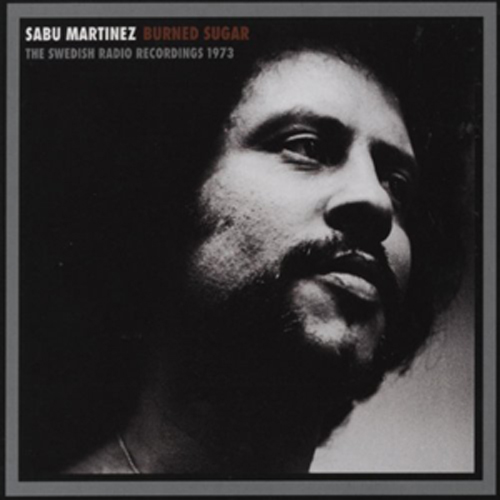


”Burned Sugar” features another Swedish Radio session, this time fron 1973, with the CD being expanded with three tracks recorded in the Polyvox Studio in Stockholm the following year. Not only the best volume of these four, but also the best Martinez album I've heard! It's an incredibly lively document with sweaty, funky, organic tracks. Clearly moving in the fusion jazz direction, but this is fusion that's meaty, beaty, big and bouncy and pretty damn irresistable. The Polyvox takes detracts a bit (especially the "Education" track which is only a minute and a half of the band working out a beat) but I can live with that.

The title track from ”Maldito Primitivo” picks up where "Burned Sugar" left off and would have fit nicely on that collection, and is by far the best track on this disc.The remainder of the disc is jazzy salsa galore, and while it's pretty good, it isn't nearly on the same level as the tremendous "Burned Sugar". 

Taken together, these four volumes are a varied presentation of Sabu Martinez's musicianship. They have their ups and downs, depending on your personal preferences. All in all, they're much better than "Afro Temple", with "Burned Sugar" being my obvious pick of the bunch.

Winds & Skins full album playlist
The Dalecarlia Reordings 1971-72 full album playlist
Burned Sugar full album playlist
Maldito Primitivo full album playlist

Friday, September 14, 2018

SABU MARTINEZ – Afro Temple (Grammofonverket, 1973)

Instrumental, spoken word
International relevance: ***

New York born percussionist Louis 'Sabu' Martinez was something of a wunderkind, making his professional debut in 1941 at the age of 11. At 18 he was offered a place in Dizzy Gillespie's orchestra, and he later went on to work with jazz giants like Charlie Parker, Duke Ellington, Thelonious Monk, Art Blakey, and Charles Mingus. His band leader debut came in 1957 with ”Palo Congo” on the Blue Note label. Ten years later he moved to Sweden and released a couple of albums under his own name of which ”Afro Temple” is the best known.

The album was recorded in April 1973 with a number of renowned instrumentalists, among them Christer Boustedt and Bernt Rosengren on saxes and flutes, U.S. born Swedish bassist Red Mitchell, and drummer Ali Lundbohm (of Vildkaktus). Needless to say, it's a percussion heavy album with strong Afro-Cuban influences, not only featuring Martinez himself but also four other conga players. The title track is fine with Boustedt wailing away on his alto and the reverb drenched ”Para Ti, Tito Rodriguez” and funky ”My Christina” are pretty cool too, but I think the album as a whole is overrated.

The folks at Mellotronen wouldn't agree with me as they've released a series of previously unreleased Martinez recordings made for the Swedish Radio 1967-78, ”Winds & Skins” (with saxophonist/flautist Sahib Shihab), ”Burned Sugar” and ”Maldito Primivo”.

Martinez died in Sweden from gastric ulcer in 1979, only 48 years old.

Full album playlist

Sunday, June 22, 2025

LIFE – Life (Coop, 1982)


Instrumental
International relevance: **

Before you gasp in anticipation: this has nothing to do with Anders Nordh's Life. It's a jazz funk album released on the Coop label best known to proggsters for one LP each by Pondus and Sabu Martinez. Speaking of Martinez: Life drummer Conny Lundström can be heard on his legendary ”Afro Temple” as well as Mellotronen's archival Sabu disc ”The Dalecarlia Recordings”. Keyboardist Pierre Swärd is probably the best known member of the gang though, with a curriculum vitae covering Mikael Ramel, Acke and Soffgruppen and plenty beyond that.

But make no mistake: The Life album is a truly futile effort of stiff furniture store fusion devoid of soul, spirit and driving force. Hadn't it been for the band name, this album would show no traces of life whatsoever. It's so empty that I can't even be angry at it – it's just nothing. Zero, zilch, nada and nought. Even the album cover excels in utter voidness.

Albums like this always make me wonder why they even exist. Why did anyone bother to record this? Who bothers to listen to it? Does anybody actually like it? Isn't there a road somewhere that needs filling?

Sheesh.

Full album

Sunday, July 8, 2018

MERIT HEMMINGSON – Huvva! (EMI, 1971) / Trollskog (EMI, 1972) / Bergtagen (EMI, 1973) / Balsam (EMI, 1975)

There's something cheesy about a lot of what Merit Hemmingson has released over the years, but when her blend of Hammond jazz, pop and Swedish traditional music worked in her favour, it certainly has an appeal that is hard to resist.

Hemmingson began her recording career in the 60's, releasing a few albums including two on RCA Camden. Songs like ”A Taste of Honey”, ”Watermelon Man”, ”Can't Take My Eyes Off You” and ”Little Green Apples” saw her trying to make a name for herself in the instrumental soul jazz/easy listening mould. It wasn't until her first album for EMI that she found the folk music based style that made her popular act in Sweden with numerous TV appearances and respectable album sales. Her best albums are still highly rated by quite a few, and she even had a bit of a renaissance in recent years, and did a few shows with Kebnekajse.

Huvva! – Svensk folkmusik på beat (EMI Columbia, 1971)
Instrumental, wordless vocals
International relevance: ***

With the help from luminaries such as Jojje Wadenius, Slim Borgudd, renaissance musician Sven Berger and noted folk fiddler Ole Hjort, Merit Hemmingson brought her vision to life. Leaving the crowd pleasing easy listening chestnuts behind in favour of exclusively traditional tunes, she carved out a niche that at the time was entirely her own. Her reputation of being the groove queen of Sweden began here, with swinging renditions of ”Gånglåt från Ovanåker” and the much loved ”Gammal jämtländsk brudmarsch”. But ”Huvva!” (a word in northern dialects roughly meaning ”crikey!”) has a fair amount of reflective moments too – the short ”Gammalståschans hjärtesuck” is laced with mournful wordless vocals, and ”Vindarna sucka uti skogarna” touches on Hansson & Karlsson at their most sombre.

Although ”Huvva!” is her fourth album, it feels like her debut. And a strong 'debut' it is.

Trollskog (Mer svensk folkmusik på beat) (EMI Columbia, 1972)
Instrumental, Swedish vocals, wordless vocals
International relevance: ***

”Trollskog” continues where ”Huvva!” left off, taking some of predecessor's musicians along. Added to the studio line-up is Björn J:son Lindh on flute, guitar wiz Janne Schaffer and percussionist Sabu Martinez and others. The partial personnel changes made for a somewhat funkier style, and even attributed a psychedelic tinge to some of the tracks. Almost as good as "Huvva!".

Bergtagen (EMI, 1973)
International relevance: ***
Instrumental, wordless vocals

After releasing ”Det for två vita duvor – folkton i Vikens kapell” together with impossible-to-pinpoint larger-than-life comedian/poet/childrens' TV host/thinker/eccentric Beppe Wolgers earlier in 1973, (Wolgers also appears on a couple of tracks on "Trollskog".) Hemmingson returned with an album made with newly formed three-piece backing band Folkmusikgruppen. It's a self-assured album and she obviously feels at ease with having her own band as opposed to working with seasoned studio musicians, but at the same time the concept was slowly beginning to wear thin. The sense of pioneering exploration that made her first two proper folk albums so appealing is waning off (she even re-recorded ”Gammal jämtländsk brudmarsch” or the album), and the prevalent jazz influences are oddly enough stifling to the music. ”Bergtagen” has a couple of fine tracks (including the contageously groove ”Domaredansen”) but it's far too uneven to compete with ”Huvva!” and ”Trollskog”. Having said that, I still think it's an OK album to have, especially to complete the informal trio of folk albums that began with "Huvva!".

Balsam (EMI, 1975)
Instrumental, English vocals, wordless vocals
International relevance: **
 
By the time of ”Balsam”, Hemmingson obviously realized she couldn't take the hitherto successful concept much further without repeating herself too much. Bringing more scat singing, harmonica, synthesizers, strings etc, plus a more expensive sounding production to the table, ”Balsam” is in some way a return to her pre-”Huvva!” years, with a greater emphasis on easy listening, only grander in scope. Unfortunately it meant a step completely in the wrong directions, with Hemmingson losing her tracka altogether. An atrocious discofied version of soul classic ”I Heard It Through the Grapevine” proves my point well enough.
 
Hemmingson has continued performing and making albums through the years, but with ”Balsam” painfully marking the end of an era, there's no reason for this blog to go further down her discography.
 

Thursday, January 22, 2026

ED THIGPEN'S ACTION-RE-ACTION – Ed Thigpen's Action-Re-Action (Sonet, 1974)

 
Instrumental
International relevance: ***

Ed Thigpen was a Chicago born drummer growing up in Los Angeles who played with several major league performers. He's probably best known for his work with Oscar Peterson from the late 50s to the mid 60s. He moved to Copenhagen in 1972, and spent the remainder of his life there (he died in 2010 and is buried in Copenhagen). ”Ed Thigpen's Action-Re-Action” was recorded in Denmark in spring 1973 but with a partly Swedish line-up including Lennart Åberg, Sabu Martinez and Kjell Öhman. It was first released on Swedish Sonet in 1974.

Split in two suites ”House Of Poets” and ”Action-Re-Action” divided by standalone track ”Danish Drive”, it's an often funky fusion affair touching on soul jazz, with slight hints at early 70s Miles Davis. The short ”Adventures Of A Duck With Friends” from the title suite even suggests Don Cherry's organic music. While the music isn't always stone cold excellent, it's actually a pretty pleasant experience to listen to the exceptionally tight line-up. It's indeed a high-level performance that everyone involved seem to love being a part of. And compared to several other Swedish jazz fusion albums that sound like they were recorded by a group of social workers on a day release trip to a conference center, this album ought to be a given choice for those into the genre.

The album was reissued on a CD as a twofer with another Danish but lesser 1973 set, "Resource", as "Ed Thigpen In Copenhagen 1973-74" in the mid noughties.

House Of Poets: Le Matin
House Of Poets: Le Soir
House Of Poets: Who's Kidding Who?
Danish Drive 
Action-Re-Action: Illusions
Action-Re-Action: Adventures Of A Duck With Friends
Action-Re-Action: Action-Re-Action

Monday, July 7, 2025

BENGT-ARNE WALLIN – Varmluft (Sonet, 1972)


Swedish vocals, instrumental
International relevance: **

Bengt-Arne Wallin is surrounded by an interesting lot of performers on ”Varmluft”. Apart from the internationally renowned swing and bebop trumpeter Clark Terry, there's a number of domestic dignitaries here including Marie Selander, Lennart Åberg (of Rena Rama), Georg Riedel, Sabu Martinez, Anthony Reebop Kwaku Bah and Maffy Falay. And as always, Janne Schaffer. The music could be called progressive big band, but that doesn't quite say much about its variety. There are low-key, moody moments, funky sections, folksy moments – there's a little bit of everything working together as a kaleidoscopic whole. Wallin sometimes wanted too much at once which is the problem with for instance ”Wallin/Wallin”, but ”Varmluft” is a bit better sorted out. Not everything here is successful, but some of it is. And I do appreciate his approach even when it doesn't work out completely. He was a visionary and it's always heartwarming delving into a visionary's work.

The cover art is made by Lasse Åberg.

No links found 

Wednesday, August 22, 2018

MIXTURE – Mixture (Coop, 1980)

Instrumental, English vocals
International relevance: ***

The Coop label was connected to Björbobandet who released one album together with Sabu Martinez in 1971. The label's main focus was jazz, with Mixture covering the fusion area. This eponymous album is the only one they made. Not essential but surprisingly sparkling for the genre. It doesn't seem as if their main purpose was to demonstrate their overeducated skills but to have fun while playing. It does have its share of boring genre typicalities (including a dreadful funk track, ”Use Your Soul”), but it's not quite as patience killing as other, and better known, examples of the style.

Use Your Soul

Thursday, August 20, 2020

MADS VINDING GROUP - Danish Design (Sonet, 1974)

Instrumental
International relevance: ***
 
It's albums like this that makes me question my vocation. Why do I do this? How far am I willing to go with this blog? Is it really just a karmic punishment for mistakingly killing a squirrel in a previous life by sitting on it thinking it was a small cushion? Am I a bad person? Is it only right that I suffer?

For a long time, I've put off writing about "Danish Design". Yeah, you've already figured out why. It's Danish. The title already says so.

Or so I tried to convince myself, ignoring the cold, hard facts. And they are as follows: The album is recorded in Sweden. It's produced by a Swede, Rune Öfwerman. Engineered by another Swede, Lasse Gustavsson. All musicians except Mads Vinding himself are Swedish (he's, you know, Danish). Sabu Martinez, percussion. Ola Brunkert, drums. Jan Schaffer, guitar. Keyboards, they're played by Kjell Öhman -- very Swedish. Released by Sonet Records? Ah yes, a Swedish label.

You see where this is going, don't you?

I can run, but I can't hide. It's a dirty job but somebody's got to do it. Tough shit it had to be me.

[insert inappropriate word referring to sexual intercourse]

Let's put it this way: This album is so boring, so relentlessly tedious that I consider playing Coste Apetrea's "Nyspolat" seven times in a row while breathing inside a very small plastic bag.

This is fusion at its worst. Soulless. Impotent. Clinical. There's more life in a lab grown bacterial culture than on this album.

I hate the album cover too.

Full album playlist

Wednesday, March 25, 2026

HOT SALSA – Hot Salsa (Montezuma, 1979)


English vocals, other languages
International relevance: *

Hot Salsa came together already in 1976 when a group of latinos living in Sweden met in a music pub in Stockholm. Among those were Sabu Martinez's sons Johnny and René, Wilfredo Stephenson of Aston Reymers Rivaler, and Rafael Sida of EGBA. Initially playing locally in small pubs and clubs, a live session for Tonkraft broke them to a nationwide audience (with one selection included on ”Tonkraft 1977-1978”). Their first album followed in 1979, released on the Montezuma label. Helping them out on the album were a few other noted names including oft-hired percussionist Malando Gassama and singer Susanne Nordin (later appearing on albums by Tomas Forssell and Occident).

As their name implies, the group played the Latin American salsa by way New York with some extra pinches of jazz and funk. I'm quite fond of the 70s New York salsa which can be hard swinging with rough edges, sometimes having almost militant overtones in a deep funk way. In short, it's entertainment with a meaning beyond sheer fun. Hot Salsa know the moves, but where New York salsa bears the message in its very sound, Hot Salsa's attempt comes off as too slick and proper. It's very competent, certainly tight, and I don't doubt they really meant it, but even though many of them have the right origins and influences, it still sounds like something out of a music academy. I hear their debut album with my ears, but I can't hear it with my heart and soul which is a must for this kind of music.

It's The Rhythm / Gulliver / Get In The Groove / Fishing In Funky Waters / Simbabele  

Tuesday, July 23, 2024

BJÖRN ARAHB – Jag är en bekymrad socialist (YTF, 1974)


Swedish vocals
International relevance: *

Björn Arahb was a visa singer (to remind you, visa is a certain kind of Swedish singer/songwriter music) that made handful of albums in the 70's and early 80's. 

Released in 1974, it's made up by songs written and released by the #1 visa singer Cornelis Vreeswijk. Several jazz and prog alumnis back him up, including Wlodek Gulgowski, Sabu Martinez, Jan Bandel and Luis Agudo (Energy). Lorne de Wolfe of Contact designed the album cover. Together they work up a funky groove on some tracks – try for instance ”Telegram for Lucidor”, ”En visa till Ellen när hon hade flyttat hemifrån” or ”Ågren”. Thing is, you can get it too from Vreeswijk's own albums around 1969/70, and better. And as Arahb tries hard to mimick Vreeswijk's special way of phrasing, ”Jag är en bekymrad socialist” comes off as a redudant work of a lesser copycat. The album is of course meant as a tribute but it falls flat compared to the original.

Full album playlist